Christian Media, Christian Radio, Christianity, Devotional, Faith, Fatherhood, Hope, Miracles

Three Men. One Passion. One Word. One Spirit. An Eternal Legacy.

This week 14 November 2026, with the passing of Bob Hoskins, something deeply personal struck me.

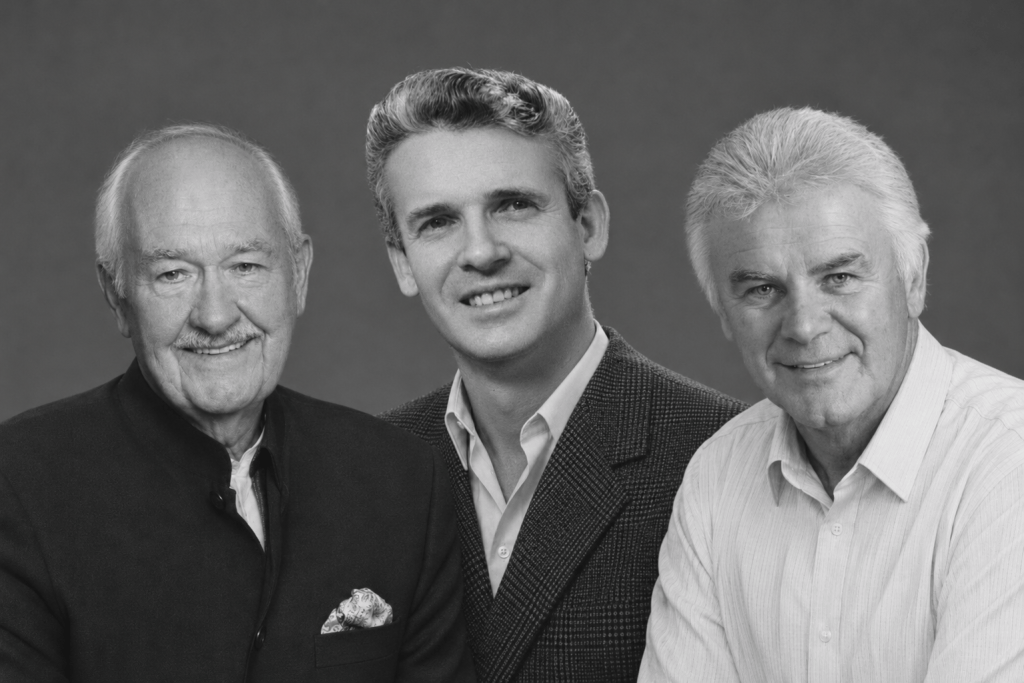
Three men who have profoundly impacted my life have now gone home to be in the presence of the One they loved and served so passionately.

Bob Gass. Jean L’Herroux, my Dad. Bob Hoskins.

Three remarkable men. Three different personalities and journeys. Yet one extraordinary common thread that connected their lives and helped shape mine.

They were not simply preachers of God’s Word. They were men of God’s Word. And just as importantly, they were men of the Holy Spirit.

There is something profoundly powerful about that combination.

They didn’t merely preach the Scriptures from a platform. They lived them. They were grounded and rooted in God’s Word, yet deeply dependent upon the presence, power and leading of the Holy Spirit.

They understood that the Word and the Spirit were never intended to be separated.

The Word gave them their foundation. The Holy Spirit gave them the power to live it and proclaim it.

Their lives demonstrated what happens when a heart is anchored in Scripture and surrendered to the Spirit of God.

And I had the extraordinary privilege of knowing them, listening to them and learning from their example.

Every Conversation Came Back to God

One of the things I remember most vividly is that, no matter where a conversation began, somehow it always found its way back to God’s Word and the work of the Holy Spirit.

Whether we were discussing family, ministry, challenges, disappointments or the future, Scripture would naturally emerge.

Not because they were trying to sound spiritual, but because God’s Word was so deeply embedded in their hearts.

And there was something else.

They were men who recognised their dependence upon the Holy Spirit. They knew that knowledge of Scripture alone was not enough. They needed His wisdom, His guidance, His anointing and His power.

They didn’t simply want to know what God had said. They wanted to remain sensitive to what the Holy Spirit was saying and doing.

You cannot spend time with people who genuinely love God’s Word and walk in dependence upon His Spirit without something of that passion rubbing off on you.

And that is exactly what happened to me.

One Burning Desire

What united these men was something far greater than their ministries or accomplishments.

They shared one burning desire: that people of every generation, young, middle-aged and old, would discover the life-transforming power of God’s Word and experience the reality of the Holy Spirit in their lives.

They wanted people to read the Scriptures, understand them, believe them and, above all, live by them.

But they also understood that genuine transformation was not simply the result of acquiring biblical knowledge.

It was the work of the Holy Spirit making the truth of God’s Word alive in people’s hearts.

They understood that the power was not in the personality of the preacher, but in the Word being proclaimed and the Spirit who brings that Word to life.

Their ambition wasn’t to produce admirers of their ministries.

It was to see people become lovers of God’s Word, filled with the Holy Spirit, and equipped to live lives that reflected Jesus Christ.

The Greatest Gift My Dad Gave Me

Today the 26 November, is the anniversary of my Dad’s own promotion to glory. When I think of him, Jean L’Herroux, I realise that one of the greatest gifts he ever gave me wasn’t material.

He gave me a love for the Bible and an appreciation for the presence and power of the Holy Spirit.

Through his life and his words, he taught me that Scripture wasn’t something reserved for Sundays. It was God’s divine manual for living, a source of wisdom, strength, correction and hope.

But he also taught me that the Christian life was never intended to be lived in our own strength.

We need the Holy Spirit.

To guide us. To empower us. To illuminate the Scriptures. To shape our character and lead us into a deeper relationship with Jesus.

That gift has remained with me, and the older I become, the more I realise just how priceless it was.

Bob Gass and Bob Hoskins reinforced that same conviction in my life.

What impressed me wasn’t simply their ability to communicate Scripture, but their absolute confidence in its authority and their dependence upon the Holy Spirit to accomplish what human ability never could.

Their passion wasn’t dependent upon recognition or applause. It was a lifelong calling, pursued with extraordinary commitment and dedication.

And countless lives have been touched through their faithfulness.

Mine included.

Men of the Word. Men of the Spirit.

If there is one lesson these three men have left deeply imprinted upon my heart, it is this:

We must never become so focused on the Word that we neglect the Spirit, nor so focused on the Spirit that we neglect the Word.

We need both.

The Word keeps us grounded in truth. The Holy Spirit empowers us to walk in that truth.

The Word reveals the heart of God. The Spirit opens our hearts to understand and respond to Him.

And when the Word and the Spirit are embraced together, lives are transformed.

These men understood that.

They didn’t just want people to hear about God. They wanted people to know Him, to encounter His presence and to live under the authority of His Word.

That is the legacy they leave behind.

Their Voices May Be Silent, but Their Influence Lives On

As I reflect on their passing, I feel both sadness and overwhelming gratitude.

Sadness because their physical presence is no longer with us. Gratitude because of what they deposited into the lives of those privileged to know them.

Hebrews 13:7 reminds us:

“Remember your leaders, who spoke the word of God to you. Consider the outcome of their way of life and imitate their faith.”

What a powerful reminder.

We honour faithful servants of God not simply by remembering what they said, but by following the example of how they lived.

Their faith. Their convictions. Their consistency. Their devotion to Scripture. Their sensitivity to the Holy Spirit.

The greatest tribute we can pay them is to live out the very truths they proclaimed and remain surrendered to the same Holy Spirit who empowered their lives.

The Legacy I Carry

Looking back, I can now see how these three men, woven into different chapters of my life, shared a passion that became woven into the fabric of my own.

They helped make me a lover of God’s Word and someone who recognises how desperately we need the Holy Spirit.

Not simply someone who reads or teaches Scripture, but someone who treasures it, depends upon it and longs to see its truth come alive through the work of the Spirit.

And for that, I will always be grateful.

Isaiah 40:8 declares:

“The grass withers and the flowers fall, but the word of our God endures forever.”

Their earthly journeys are complete. I take great comfort in believing they are now in the presence of the Saviour they served so faithfully.

Yet their influence continues in the lives they touched, the seeds of truth they planted and the generations still being shaped by their faithfulness.

And it continues in me.

Perhaps that is one of the most beautiful legacies any servant of God can leave behind.

Not simply that people remember our names, our sermons or our accomplishments, but that because of our lives, others have come to love God’s Word, know the power of His Spirit and walk more closely with Jesus.

Thank you, Bob Hoskins.

Thank you, Dad.

Thank you, Bob Gass.

For your example, your faithfulness, your extraordinary love for the Scriptures and your dependence upon the Holy Spirit.

You have finished your race, but the baton you carried has been passed on.

And by God’s grace, with His Word as my foundation and His Spirit as my strength, I intend to keep running with it.

Three men. One passion. One Word. One Spirit. An eternal legacy.

To God be the glory.

In French…

Trois hommes. Une passion. Une Parole. Un Esprit. Un héritage éternel.

Cette semaine, le 14 novembre 2026, au moment du départ de Bob Hoskins, quelque chose de profondément personnel m’a touché.

Trois hommes qui ont profondément marqué ma vie sont désormais entrés dans la présence de Celui qu’ils ont aimé et servi avec tant de passion.

Bob Gass. Jean L’Herroux, mon père. Bob Hoskins.

Trois hommes remarquables. Trois personnalités différentes. Trois parcours uniques. Pourtant, un fil conducteur extraordinaire reliait leurs vies et a contribué à façonner la mienne.

Ils n’étaient pas simplement des prédicateurs de la Parole de Dieu. Ils étaient des hommes de la Parole de Dieu. Et tout aussi important, ils étaient des hommes du Saint-Esprit.

Il y a quelque chose de profondément puissant dans cette alliance.

Ils ne se contentaient pas de prêcher les Écritures depuis une estrade. Ils les vivaient. Ils étaient enracinés dans la Parole de Dieu, tout en dépendant profondément de la présence, de la puissance et de la direction du Saint-Esprit.

Ils comprenaient que la Parole et l’Esprit n’ont jamais été destinés à être séparés.

La Parole leur donnait leur fondement. Le Saint-Esprit leur donnait la puissance de la vivre et de la proclamer.

Leur vie démontrait ce qui se produit lorsqu’un cœur est ancré dans les Écritures et entièrement abandonné à l’Esprit de Dieu.

Et j’ai eu l’immense privilège de les connaître, de les écouter et d’apprendre à travers leur exemple.

Chaque conversation revenait à Dieu

L’une des choses dont je me souviens le plus clairement, c’est que peu importe où une conversation commençait, elle revenait toujours, d’une manière ou d’une autre, à la Parole de Dieu et à l’œuvre du Saint-Esprit.

Que nous parlions de la famille, du ministère, des défis, des déceptions ou de l’avenir, les Écritures finissaient naturellement par émerger.

Non pas parce qu’ils cherchaient à paraître spirituels, mais parce que la Parole de Dieu était profondément gravée dans leur cœur.

Et il y avait autre chose.

C’étaient des hommes qui reconnaissaient leur dépendance envers le Saint-Esprit. Ils savaient que la seule connaissance des Écritures ne suffisait pas. Ils avaient besoin de Sa sagesse, de Sa direction, de Son onction et de Sa puissance.

Ils ne voulaient pas seulement savoir ce que Dieu avait dit. Ils désiraient rester sensibles à ce que le Saint-Esprit disait et faisait.

On ne peut pas passer du temps avec des personnes qui aiment véritablement la Parole de Dieu et qui marchent dans la dépendance de Son Esprit sans que quelque chose de cette passion ne nous soit communiquée.

Et c’est exactement ce qui s’est produit dans ma vie.

Un seul désir brûlant

Ce qui unissait ces hommes était bien plus grand que leurs ministères ou leurs accomplissements.

Ils partageaient un même désir brûlant : que des personnes de toutes générations, jeunes, d’âge mûr ou plus âgées, découvrent la puissance transformatrice de la Parole de Dieu et expérimentent la réalité du Saint-Esprit dans leur vie.

Ils voulaient que les gens lisent les Écritures, les comprennent, y croient et, surtout, les mettent en pratique.

Mais ils comprenaient également que la véritable transformation ne résulte pas simplement de l’acquisition de connaissances bibliques.

C’est l’œuvre du Saint-Esprit qui rend la vérité de la Parole de Dieu vivante dans le cœur des hommes.

Ils savaient que la puissance ne résidait pas dans la personnalité du prédicateur, mais dans la Parole proclamée et dans l’Esprit qui donne vie à cette Parole.

Leur ambition n’était pas de susciter des admirateurs de leur ministère.

Elle était de voir des hommes et des femmes devenir amoureux de la Parole de Dieu, remplis du Saint-Esprit et équipés pour vivre des vies qui reflètent Jésus-Christ.

Le plus grand cadeau que mon père m’ait donné

Aujourd’hui, le 26 novembre, marque l’anniversaire de l’entrée dans la gloire de mon père. Lorsque je pense à lui, Jean L’Herroux, je réalise que l’un des plus grands cadeaux qu’il m’ait jamais faits n’était pas matériel.

Il m’a transmis l’amour de la Bible et l’appréciation de la présence et de la puissance du Saint-Esprit.

Par sa vie et ses paroles, il m’a enseigné que les Écritures n’étaient pas réservées au dimanche. Elles étaient le manuel divin de Dieu pour la vie, une source de sagesse, de force, de correction et d’espérance.

Mais il m’a aussi appris que la vie chrétienne n’a jamais été destinée à être vécue par nos propres forces.

Nous avons besoin du Saint-Esprit.

Pour nous guider. Pour nous fortifier. Pour éclairer les Écritures. Pour façonner notre caractère et nous conduire dans une relation plus profonde avec Jésus.

Ce cadeau est resté avec moi et, plus les années passent, plus je réalise combien il est précieux.

Bob Gass et Bob Hoskins ont renforcé cette même conviction dans ma vie.

Ce qui m’impressionnait n’était pas seulement leur capacité à communiquer les Écritures, mais leur confiance absolue dans leur autorité et leur dépendance envers le Saint-Esprit pour accomplir ce qu’aucune capacité humaine ne pourrait produire.

Leur passion ne dépendait ni de la reconnaissance ni des applaudissements. C’était un appel poursuivi toute leur vie avec un engagement et une fidélité extraordinaires.

Et d’innombrables vies ont été touchées grâce à leur fidélité.

La mienne en fait partie.

Des hommes de la Parole. Des hommes de l’Esprit.

S’il est une leçon que ces trois hommes ont profondément gravée dans mon cœur, c’est celle-ci :

Nous ne devons jamais être tellement centrés sur la Parole que nous négligions l’Esprit, ni tellement centrés sur l’Esprit que nous négligions la Parole.

Nous avons besoin des deux.

La Parole nous garde enracinés dans la vérité. Le Saint-Esprit nous donne la puissance de marcher dans cette vérité.

La Parole révèle le cœur de Dieu. L’Esprit ouvre nos cœurs pour le comprendre et lui répondre.

Et lorsque la Parole et l’Esprit sont pleinement accueillis ensemble, les vies sont transformées.

Ces hommes l’avaient compris.

Ils ne voulaient pas simplement que les gens entendent parler de Dieu. Ils voulaient qu’ils Le connaissent, qu’ils rencontrent Sa présence et qu’ils vivent sous l’autorité de Sa Parole.

Voilà l’héritage qu’ils laissent derrière eux.

Leurs voix se sont tues, mais leur influence demeure

Alors que je réfléchis à leur départ, je ressens à la fois de la tristesse et une profonde gratitude.

De la tristesse parce que leur présence physique n’est plus parmi nous.

De la gratitude pour tout ce qu’ils ont déposé dans la vie de ceux qui ont eu le privilège de les connaître.

Hébreux 13:7 nous rappelle :

« Souvenez-vous de vos conducteurs qui vous ont annoncé la parole de Dieu ; considérez quelle a été la fin de leur vie, et imitez leur foi. »

Quel puissant rappel !

Nous honorons les serviteurs fidèles de Dieu non seulement en nous souvenant de ce qu’ils ont dit, mais aussi en suivant l’exemple de leur manière de vivre.

Leur foi. Leurs convictions. Leur constance. Leur attachement aux Écritures. Leur sensibilité au Saint-Esprit.

Le plus bel hommage que nous puissions leur rendre est de vivre les vérités qu’ils ont proclamées et de demeurer soumis au même Saint-Esprit qui a puissamment agi dans leur vie.

L’héritage que je porte

Avec le recul, je peux aujourd’hui voir comment ces trois hommes, présents à différentes étapes de ma vie, partageaient une passion qui est devenue une part essentielle de la mienne.

Ils ont contribué à faire de moi un amoureux de la Parole de Dieu et quelqu’un qui reconnaît combien nous avons désespérément besoin du Saint-Esprit.

Non seulement quelqu’un qui lit ou enseigne les Écritures, mais quelqu’un qui les chérit, s’appuie sur elles et désire voir leur vérité prendre vie par l’action de l’Esprit.

Et pour cela, je leur serai toujours reconnaissant.

Ésaïe 40:8 déclare :

« L’herbe sèche, la fleur tombe, mais la parole de notre Dieu subsiste éternellement. »

Leur parcours terrestre est achevé. Je trouve un grand réconfort dans la conviction qu’ils sont désormais dans la présence du Sauveur qu’ils ont servi avec tant de fidélité.

Pourtant, leur influence se poursuit dans les vies qu’ils ont touchées, dans les semences de vérité qu’ils ont plantées et dans les générations qui continuent d’être façonnées par leur fidélité.

Et elle continue en moi.

C’est peut-être là l’un des plus beaux héritages qu’un serviteur de Dieu puisse laisser.

Non pas simplement que les gens se souviennent de notre nom, de nos prédications ou de nos accomplissements, mais que, grâce à notre vie, d’autres en soient venus à aimer la Parole de Dieu, à connaître la puissance de Son Esprit et à marcher plus près de Jésus.

Merci, Bob Hoskins.

Merci, Papa.

Merci, Bob Gass.

Pour votre exemple, votre fidélité, votre amour extraordinaire pour les Écritures et votre dépendance envers le Saint-Esprit.

Vous avez achevé votre course, mais le témoin que vous portiez a été transmis.

Et par la grâce de Dieu, avec Sa Parole comme fondement et Son Esprit comme force, j’ai l’intention de continuer à courir avec lui.

Trois hommes. Une passion. Une Parole. Un Esprit. Un héritage éternel.

À Dieu soit toute la gloire.
Christianity

Father knows…

Today, I want to speak especially to those who may be struggling to understand where God is in the midst of this tragedy.

The events at Big Church Festival have affected so many people. A life has been lost, others have been injured, and families, friends, witnesses, responders and the wider Big Church Festival community are carrying a weight of sadness that words cannot easily express.

Perhaps you are feeling downcast, worried, shaken or discouraged.

Perhaps you are asking the question that so often comes in moments like these:

“Why, God?”

I don’t pretend to have an answer.

There are moments when our theology does not remove the pain, our words seem inadequate, and we simply cannot understand why something has happened.

But today I want to remind you of one simple truth:

FATHER KNOWS.

Jesus said:

“Your Father knows what you need before you ask him.” 
Matthew 6:8

Nothing about our pain is hidden from our Heavenly Father.

He knows the questions we cannot answer.
He knows the tears we have not yet cried.
He knows the shock and trauma people may be carrying.
He knows the family whose world has suddenly changed.
He knows those who are injured and recovering.
He knows those who witnessed what happened.
He knows the staff, volunteers and emergency responders who stepped forward to help.
And He knows the Big Church Festival team, who will be deeply affected by this tragedy.

Father knows.

When we don’t understand

One of the hardest things about faith is trusting God when life does not make sense.

It is easy to speak about God’s goodness when the sun is shining. It is much harder when the storm comes and we find ourselves asking questions for which there appear to be no answers.

Yet Scripture does not give us a picture of a distant Father who watches our suffering without concern.

The biblical picture of Father is intimate: Abba — Father.

He is our source, our sustainer, our strength and the One to whom we can run.

That does not mean we will always understand.

Faith is not pretending that tragedy does not hurt. It does not require us to suppress our questions or rush past our grief.

Sometimes faith simply says:

“Father, I don’t understand this — but I know You are here.”

Father knows what you are carrying

So today, whatever this tragedy has stirred within you, remember:

When you are weary, He knows and He is your strength.

When you are fearful, He knows and He is your peace.

When you are lost, He knows and He is the Good Shepherd.

When you are downcast, He knows and He is the lifter of your head.

When you are lonely, He knows and He draws near.

When you feel unloved, remember that God loved us so deeply that He gave His Son for us.

When you are caught in the storm, He knows — and the One who calmed the wind and waves is still with you in the boat.

When you feel as though you are drowning, you can still cry, “Lord, save me.”

When your heart is breaking, He knows — for He “heals the brokenhearted and binds up their wounds.” (Psalm 147:3)

When you have fallen, His everlasting arms are underneath you.

When you need comfort, He knows — and He has given us the Holy Spirit, our Comforter.

And when death itself causes us to fear, Jesus still declares:

“I am the resurrection and the life.” 
John 11:25

Father knows.

For those who are grieving

Today, our prayers must particularly surround the family and friends of the person who tragically lost their life.

There are no clever words for such a loss.

We should not try to explain away their grief. We simply pray that the God of all comfort will draw close to them, carry them through the days ahead and surround them with people who will love and support them.

We pray too for those who were injured, for their families and for everyone who witnessed or was directly involved in what happened.

And let’s remember the Big Church Festival team.

Behind an event like BCF are people who have poured their hearts, energy, prayers and lives into creating a place where thousands can gather to worship Jesus. They too will be hurting deeply.

May they know that the wider Church is standing with them, praying for them and supporting them through this.

He knows you by name

Jesus tells us that our Heavenly Father knows us so intimately that even the hairs on our heads are numbered.

Think about that.

The God who holds creation together knows you.

He knows every intimate detail of your life — your fears, your questions, your joys, your disappointments and the things you cannot find words to express.

So if today you are struggling, don’t feel that you have to manufacture some great expression of faith.

Just come to Him.

If all you can pray is:

“Father, help me.”

He hears.

If all you can say is:

“Father, I don’t understand.”

He understands.

If all you have are tears, He sees them.

And if you have no words at all, He still knows.

Father knows

Jesus said:

“Do not be afraid, little flock, for your Father has been pleased to give you the kingdom.” 
Luke 12:32

Today, perhaps more than anything else, we need to rediscover the security contained in those two words:

Your Father.

We don’t know why every tragedy happens.

We don’t have an explanation for every moment of suffering.

And faith does not mean pretending that we do.

But this we can know:

Our Father has not stopped being Father.

He is near to the brokenhearted.
He is present with those who grieve.
He is strength for those who are weary.
He is peace for those who are afraid.
He is comfort for those who mourn.
And ultimately, in Jesus, He is resurrection and life.

So today, let’s pray:

For the family who have lost someone they love.

For those who have been injured.

For those who witnessed what happened and may be carrying difficult memories.

For the staff, volunteers and emergency services who responded.

For the leadership and entire Big Church Festival team.

And for one another.

When we cannot understand, when we cannot explain, and when we simply don’t know what to say, may we hold on to this:

FATHER KNOWS.

And may we place ourselves, and everyone affected by this tragedy, into His loving hands.

Christianity

God’s Word still stands (some reflections on the Quiet Revival data)

Last week, the Bible Society’s Quiet Revival report was withdrawn after an issue was identified with faulty data provided by YouGov.

If you are anything like me and read the news, you probably also felt that sense of sadness and disappointment. The Bible Society has been fully transparent and handled this with great sensitivity and grace (we should keep them in prayer), but that’s difficult news to hear, especially as for many of us, the report seemed to put into words something we felt was already happening. Disappointment is a very normal, human emotion and it’s right to pause and be honest and to acknowledge the disappointment. But in our disappointment, this moment doesn’t have to steal our hope! My faith (and hopefully yours) is not built on a report or statistics (as helpful as those things can be), but it’s built on the unshakeable Word of God and the absolute confidence that He is doing something, even when we cannot see it with our own eyes.

At UCB we hear these stories nearly every single day. People write, email or ring to tell us of what God is doing in their lives. Sometimes those stories are ‘big’, such as addictions being broken and relationships being brought back together, or sometimes they are the quieter ones – God speaking to a person through the Word for Today or radio on the worst day of their lives. What we see is people finding hope again, opening a Bible for the first time, realising they are absolutely NOT alone. And we feel God at work too in our buildings: the tangible sense of God’s manifest presence, His financial provision, the way He opens doors which looked to be firmly shut.

You might be experiencing this in your own church and community too, and none of that changes because of disappointment over a report – in fact it should propel us forward knowing that God is absolutely still ‘on the move’.

For many years now, I’ve spoken about something we call the iSee vision. It comes from Jesus’ words to His disciples when He told them to lift up their eyes and look at the fields – to see what He sees. I first shared this word in 2016 at UCB, and it was a call to ‘open our eyes’ and catch a glimpse of a remarkable future, a future where young and old, every generation and nation feel and experience the power of God in their lives so that their lives are transformed. We know that in divided and turbulent times (in which we are currently living), the world needs hope and transformation more than ever. So imagine for a moment what it will look like when revival becomes an everyday experience for you, your family, your street and your workplace. What a thought!

And so, in the light of all that’s happening at the moment, I refuse to give up or to fall into disillusionment because I know that God is still powerfully at work in the UK and around the world. Data and statistics are wonderful things, but God has never needed data to do great things – He just needs willing people like you and me to be open to all that He wants to do. God is not finished with His church and with the world – He is only getting started!

P.S. Please do keep our friends at the Bible Society in prayer as they navigate this difficult time. We look forward to seeing their revised report in due course.

Christianity

Right People, Right Place – Placing People for Flourishing

Right People, Right Place! – Placing People for Flourishing

Over the last few weeks, I have been exploring the idea of how to encourage people to flourish where they serve. You can read the posts here Right People Part 1, Right people, Part 2 and Right People, Part 3

Each time, we’ve returned again and again to a simple but profound truth: people flourish when they are placed where they belong.

We’ve seen that calling is rarely rushed, that work was always part of God’s design, and that toil often arises not from effort, but from misalignment. We’ve explored the five Cs, Calling, Character, Competency, Culture, and Chemistry – not as a formula, but as a framework to help leaders discern wisely and place people faithfully.

At its heart, this series is a reminder that leadership is deeply relational. It is not merely about filling roles or achieving outcomes, but about stewarding people, purpose, and potential.

When leaders take time to listen, discern, and involve wise counsel, recruitment becomes more than a transaction — it becomes an act of care. And when individuals are encouraged to reflect honestly on where they are seated, work can become life-giving rather than draining.

So, as you move forward, whether hiring, leading, serving, or discerning your own next step – may you do so with courage and humility. May you seek alignment over urgency, discernment over assumption, and purpose over mere performance.

And as we continue to “call them in,” may we be people and leaders who help others step into work that reflects who they were created to be.

Christianity

Right People, Right Place! – Part 3

From Discernment to Flourishing

Throughout this series, we’ve explored a simple but deeply important principle: people flourish when they are placed where they belong.

In Part 1, we reflected on Samuel calling David in, a reminder that God often identifies the person before the position is ever visible. Calling precedes appointment, but it is confirmed through discernment, process, and community.

In Part 2, we explored the five Cs of recruitment, Calling, Character, Competency, Culture, and Chemistry, a framework designed to help leaders place people wisely and help individuals work in alignment rather than toil in misalignment.

Taken together, these principles remind us that recruitment is never merely functional. It is deeply formative.

Leadership as Stewardship of People

Leadership is not just about filling vacancies or achieving outcomes. At its heart, leadership is stewardship, of people, purpose, and potential.

When leaders rush placement, people may perform, but often at the cost of joy and sustainability. When leaders discern well, people grow, teams strengthen, and organisations flourish.

Wise leadership asks not only:

“Can this person do the job?”

but also:

“Is this the right season, seat, and setting for them?”

Calling Requires Community

Calling is rarely clarified in isolation. Scripture consistently shows that calling is recognised, tested, and affirmed in community.

That’s why godly leadership values:

• Prayerful discernment

• Shared wisdom

• Accountability

• Time

Calling without character lacks credibility. Calling without competence lacks effectiveness. Calling without community lacks protection.

But when all three come together, people are empowered to step into work that is life-giving and fruitful.

From Toiling to Working

Work, as God intended it, brings purpose and fulfilment. Toil, by contrast, drains energy and joy.

The difference is not effort, but alignment.

Many people are capable, committed, and hardworking, yet remain weary because they are seated in the wrong place. One of the greatest gifts leaders can give is the courage to help people move into roles where they can truly flourish.

So, let me conclude with this Invitation

Whether you are a leader, a team member, or someone prayerfully considering your next step, here are three questions worth holding before God:

• Am I working – becoming what God created me to be or merely toiling?

• Am I sitting in the right seat, in this season?

• As a leader, am I placing people for flourishing, not just for function?

As we seek to “call them in,” may we be leaders who listen well, discern wisely, and place people faithfully, trusting that God continues to call, equip, and appoint in His time.

When people are placed in the right peg hole, work becomes worship, teams become healthier, and organisations reflect something of God’s good design.

Christian Media, Christian Radio, Christianity, Devotional, Faith

Right People, Right Place! – Part 2

Let’s look at The Five Cs of Recruitment

It’s vital to make sure that people in the workplace are sitting in the right seat in relation to their role. Too many people today are on the right bus but in the wrong seat. And when that happens, even good people can end up toiling rather than truly working.

If we are to enjoy life to the full, that must include experiencing work as God intended, purposeful, fulfilling, and aligned.

So, let’s look together at what I believe is a godly and practical strategy for recruiting the right people into the right roles at the right time. Here at UCB, we refer to this as the five Cs of recruitment.

Their purpose, from a leadership perspective, is to help ensure that people are sitting in the right seat and able to fulfil their God-given assignment. The benefit for employees is that they are able to give their best, driven by purpose, not merely performance.

1. Calling

Calling asks the question: Do we believe we are living out our life assignment – the work God has uniquely entrusted to us?

God never asks someone to do something without also providing what is needed to do it well. In Scripture, calling is often accompanied by God’s equipping, what the Bible refers to as anointing. This is not a mark of status, but a sign of empowerment for responsibility.

David was called, then anointed, and only later appointed. God’s order matters. Calling is normally confirmed over time through character, competence, and community discernment. It is a process through which God shapes us into who He desires us to become.

2. Character

If we are to become the people God desires us to be and the kind of people others can trust and follow, we must pay close attention to our inner life.

Reputation is what others think of us; character is who we truly are.

We may not always control the situations we face, but we always have a choice in how we respond. Scripture places enormous weight on character, so much so that the Bible could rightly be described as a manual for godly living. It is filled with both positive and cautionary examples, given for our learning and growth.

God cares deeply about who we are becoming, not just what we are achieving.

3. Competency

Competency matters, even in ministry.

Competency is the ability to apply knowledge and skills effectively to achieve the desired outcome. While character is foundational, calling without competence can limit impact.

As I often say, if I needed major surgery, choosing between a surgeon with excellent character but no competence, and one with competence but no character, would not take long. This is not to diminish character, but to highlight that both are essential.

Character is who we are; competence is what we can do. And whatever we are called to do should be done wholeheartedly and excellently. If we want to grow in our assignment, we must also be willing to sharpen our skills.

4. Culture

Culture shapes behaviour.

At UCB, we seek to cultivate a kingdom culture – a values-based way of working where biblical principles shape our purpose, priorities, and practices. Jesus summarised this clearly:

Love God wholeheartedly and love your neighbour as yourself (Luke 10:27).

We describe this as our PPF culture – Putting People First. That means serving our audiences well but also serving one another internally as we ourselves would wish to be served.

Healthy culture isn’t just about what we believe – it’s about how we treat people every day.

5. Chemistry

Finally, chemistry matters.

Chemistry speaks to how people relate, collaborate, and function together. Good chemistry strengthens trust, improves communication, and enhances team performance. Without it, even capable teams struggle to flourish.

That’s why fit matters. Being in the right role, with the right people, enables individuals to give their very best, not just completing tasks, but becoming who God created them to be.

Let me conclude 

When people are misplaced, they may still perform, but often at the cost of joy and fulfilment. When people are well placed, work becomes life-giving rather than draining.

So, as you pray for vacancies to be filled, call them in just as Samuel called David.

And remember this pattern:

God calls. God equips. And, in time, God appoints.

May we be leaders who discern wisely, place people well, and help others enjoy their God-given work rather than merely enduring a job.

Christian Media, Christian Radio, Devotional, Evangelism, Faith

Right People, Right Place!

Recruiting and placing people well is one of the greatest responsibilities leaders carry and one of the most challenging.

Too often, recruitment becomes reactive rather than reflective. Roles are filled quickly, urgency outweighs discernment, and capable people end up sitting in the wrong seat. The result is familiar: frustration, fatigue, and far too many people toiling when they were created to work.

In this short series, Call Them In, we explore a biblical and leadership-informed approach to recruitment, placement, and purpose. Drawing from the story of Samuel and David, we reflect on the principle that calling often precedes appointment and that discernment, process, and community are essential in recognising who belongs where.

Across three parts, we will:

• Rediscover the difference between work and toil

• Explore a practical framework – the five Cs of recruitment

• Reflect on leadership as stewardship of people, not just positions

Whether you are a leader responsible for placing others, or someone discerning your own next step, this series invites you to pause, reflect, and ask deeper questions about purpose, alignment, and flourishing.

Because when people are placed well, everyone benefits.

Right People, Right Place! – Part 1

The prophet Samuel had David brought in; in other words, he called him in.

“Then the LORD said, ‘Rise and anoint him; he is the one.’ So Samuel took the horn of oil and anointed him in the presence of his brothers, and from that day on the Spirit of the LORD came powerfully upon David.”

(1 Samuel 16:13 NIV)

Recruiting the right person can be very challenging. Some time ago, as we were seeking to fill a vacancy here at UCB, I sensed the Holy Spirit impressing on me a simple but powerful thought: “Call in the person needed for this assignment, just as Samuel called for David.”

This was not a suggestion to bypass good process or responsible governance, but a reminder that discernment must sit alongside decision-making. As we prayed, reflected, and followed due process, the right person responded and we were deeply encouraged to see God at work through both spiritual attentiveness and practical wisdom.

You see, God knows the right person for the right place at the right time to do the right work, just as He knew David. Scripture consistently shows us that God’s calling often precedes public recognition. At the same time, calling is normally confirmed through community, character, and competence. God’s guidance is rarely isolated; it is discerned together.

Not only does God prepare people with the abilities needed for their assignment, but He also equips them inwardly for the responsibility they are to carry. Any sense of God’s anointing must always be held alongside accountability, fruitfulness, and integrity.

So today, if you are seeking to fill a vacancy, don’t simply rely on instinct or urgency. Prayerfully discern, involve wise counsel, and trust that God will help you recognise the right person for the assignment. When discernment and process walk together, leaders are far less likely to be disappointed.

Work Before the Fall, Toil After the Fall

Before we explore what we call here at UCB the five Cs of recruitment, it’s important to understand a foundational principle: there is a difference between work and toil.

Have you ever noticed that the word work appears in Scripture before the fall, while the word toil appears after the fall?

Genesis 2:15 tells us that God placed Adam in the Garden of Eden to work it and take care of it. Work was not a punishment, it was the very first assignment God gave humanity.

After the fall, however, Genesis 3:17 introduces toil. Toil is described as painful, fatiguing, and burdensome effort. It is not effort itself that defines toil, but effort disconnected from purpose and alignment. This goes a long way toward explaining why so many people experience deep dissatisfaction in their working lives.

Your Job Is Not Your Work

Your work is not your job.

A job is something you are trained for, paid for, and one day may leave behind. A job is often temporary. Your work, however, is what you were created for. It is the unique contribution you bring to the world through your gifts, values, and calling.

Work is not merely about productivity; it is about becoming. From a biblical perspective, work is the expression of who God created you to be. Toil, by contrast, often occurs when someone is capable and hardworking but misaligned with their true assignment.

This does not mean that meaningful work is always easy. Scripture is clear that even those living fully within God’s purposes experience challenge and perseverance. The difference is that aligned work, though demanding, brings fulfilment, while misaligned work drains life.

That is why I often say to my wife Jackie that while one day I may retire from paid employment, I can never retire from what God created me for. I can step away from a role, but not from my purpose.

A Leadership Responsibility

Research tells us that around one third of our lives, approximately 90,000 hours are spent working. That makes leadership decisions around recruitment and placement profoundly significant.

When leaders help people step into roles aligned with their design, they are not just filling vacancies, they are stewarding lives. When people are consistently placed out of alignment, even the most capable individuals can end up toiling rather than working.

This is why discernment in recruitment matters so deeply.

A Question to Reflect On

So let me leave you with this question:

Are you working – becoming what God created you to be or are you toiling, enduring a role rather than living out your true assignment?

And as leaders, are we creating environments where people can work with purpose, or incidentally placing them in positions where toil becomes inevitable?

Next time, we’ll explore what we call here at UCB the five Cs of recruitment, a framework designed to help leaders discern wisely and place people well.

Until then, let’s be intentional about ensuring that we are truly working, not merely toiling.

Christianity

Don’t lose your joy this Christmas!

We are living in a world full of joy killers, even at Christmas. The enemy’s agenda has always been the same: to steal, kill, and destroy. Yet, I love encountering people who are infectious with joy, a joy that flows from the true source of all joy, despite the circumstances they may face.

The apostle Paul understood this well. Writing from challenging circumstances, he repeatedly encouraged believers to “rejoice in the Lord always” (Philippians 4:4). Joy, then, is not dependent on stability, comfort, or ease; it is a choice rooted in faith and sustained by relationship with God.

In a volatile and uncertain world, it is easy for joy to fade. When life feels unpredictable and the future unclear, holding onto joy can seem difficult. Yet the Christmas message reminds us that joy is not anchored in what surrounds us, but in who Christ is. “For God so loved the world that He gave His one and only Son…” Christmas declares that we were never meant to simply survive life, but to live in the fullness God intended and to experience true and lasting joy.

Joy must be rooted in personal faith. When we believe and embrace the Christmas story in its fullness, joy becomes more than a feeling, it becomes a way of living. God also calls us to be carriers of His joy. Scripture reminds us that we are helpers of joy (2 Corinthians 1:24). Every time we point someone to Christ, we partner with God in restoring joy in their lives. What a calling, especially at Christmas.

I’ve spoken with many people whose joy has been buried under pressure, disappointment, or weariness. The enemy works tirelessly even to discourage God’s people, particularly during a season meant for celebration. The Lord has reminded me that if we are to help others experience joy, we must choose to live it ourselves. This happens as we immerse our hearts in God’s Word and are continually reminded of the Gospel, that Christ’s desire is for our joy to be full (John 15:11).

So how do we guard our joy?

  • Don’t lose your smile. “A joyful heart makes a cheerful face” (Proverbs 15:13).
  • Don’t lose your laughter. “A merry heart does good like medicine” (Proverbs 17:22).
  • Don’t lose your song. “Sing for joy to God our strength” (Psalm 81:1).

Joy flows from the heart. It isn’t forced; it is cultivated. George Müller once said that the first thing he intentionally did each morning was to get his heart happy in the Lord, and from that joy came strength for everything God had called him to do.

Christianity is not a religion it is a relationship marked by joy through our union with Christ. Christmas truly is good news of great joy. In a world that often feels unstable, don’t allow the enemy to steal what God has given.

May your Christmas be filled with joy, deep, resilient, and overflowing.

Have a wonderful Christmas full of joy!

Christianity

The power of choice

CHOICES MADE TODAY WILL FOR SURE AFFECT OUR TOMORROW. 

As we begin 2026 new chapter, Paul’s words in Philippians 4:1–8 offer great wisdom and spiritual clarity. These intentional steps of faith affirm our identity, belief, behaviour, and ultimately our destiny.

Let’s walk through them together:

1. “Stand fast in the Lord, beloved.”

Choose to be anchored in your identity. You are loved, not for what you do, but for who you are in Christ.

2. “Be of the same mind in the Lord.”

Choose unity. Resolve conflict intentionally. Never forget, division delays destiny.

3. “Rejoice in the Lord always.”

Choose joy. Not circumstantial happiness, but Spirit-rooted rejoicing. Joy is resistance. Joy is warfare.

4. “In everything by prayer…”

Choose prayer. Make it your lifestyle, not your emergency calls.

5. “Be anxious for nothing…”

Choose response over reaction. Anxiety shrinks vision. Prayer expands peace.

6. “Meditate on these things…”

Choose to protect your mind. Remember your thoughts shape your beliefs. Your beliefs shape your destiny.

As we journey 2026, let’s do so with:

•  Gratitude for what God has done.

•  Faith for what He’s about to do.

•  Purpose that refuses to settle.

•  Prayer that refuses to quit.

So, let’s walk into this year with courage in our step and surrender in our hearts, united, expectant, anchored, and ready for the story God is still unfolding.

For our future is not something we wait for. It’s something we build, choice by choice, step by step, in Christ.

Christianity

New Year’s resolutions that truly last

“Therefore I will look unto the Lord; I will wait for the God of my salvation: my God will hear me.” Micah 7:7 (KJV)

We are still in the opening weeks of January. As one year ended and another began, many people around the world set new goals and intentions, commonly known as New Year resolutions. A fresh year often brings fresh motivation, but experience tells us that good intentions can quickly fade. The question is not whether we make resolutions, but whether we choose ones that will truly sustain us.

Micah 7:7 offers us a set of resolutions that never expire. Written against a backdrop of turmoil and uncertainty, this verse reminds us that God remains faithful even when the world feels unstable. Within this single verse, Micah reveals three powerful, timeless commitments that provide direction for every believer:

  • “Look unto the Lord” – Faith
  • “Wait for the God of my salvation” – Patience
  • “My God will hear me” – Trust

These are not temporary objectives, but spiritual resolutions that anchor us throughout every season of life.

1. A Resolution of Faith: Look Unto the Lord

Micah begins by fixing his focus on God. Faith is not merely believing in God, it is choosing to live with our eyes set on Him. Scripture reminds us that “we walk by faith, not by sight” (2 Corinthians 5:7). As we move through this year, our journey must be shaped by God’s promises rather than by what we see around us. When we allow God’s Word to guide us, it becomes a lamp to our feet and a light for our path.

2. A Resolution of Patience: Wait for God

Waiting does not come easily, yet Micah understood that strength is renewed in the waiting. Isaiah 40:31 assures us that those who wait on the Lord will rise with renewed strength. Patience grows when we trust God’s timing, remembering that He “makes everything beautiful in its time” (Ecclesiastes 3:11).

3. A Resolution of Trust: My God Will Hear Me

Micah’s confidence rests in the certainty that God hears him. This is not wishful thinking; it is trust grounded in God’s character. “The righteous cry out, and the Lord hears them” (Psalm 34:17). When we pray, we can be confident that our God listens and responds.

So, Moving Forward

As we continue into this new year, let us embrace these lasting resolutions: to live by faith, to wait with patience, and to trust with confidence. These commitments do not depend on circumstances but on God’s unchanging faithfulness.

May our journey in 2026 be marked by faith, patience, and unwavering trust in the God who hears and answers the cries of His people. And as we make these good resolutions, let us lean on His grace to see them fulfilled for His glory.