Christianity

Don’t lose your joy this Christmas!

We are living in a world full of joy killers, even at Christmas. The enemy’s agenda has always been the same: to steal, kill, and destroy. Yet, I love encountering people who are infectious with joy, a joy that flows from the true source of all joy, despite the circumstances they may face.

The apostle Paul understood this well. Writing from challenging circumstances, he repeatedly encouraged believers to “rejoice in the Lord always” (Philippians 4:4). Joy, then, is not dependent on stability, comfort, or ease; it is a choice rooted in faith and sustained by relationship with God.

In a volatile and uncertain world, it is easy for joy to fade. When life feels unpredictable and the future unclear, holding onto joy can seem difficult. Yet the Christmas message reminds us that joy is not anchored in what surrounds us, but in who Christ is. “For God so loved the world that He gave His one and only Son…” Christmas declares that we were never meant to simply survive life, but to live in the fullness God intended and to experience true and lasting joy.

Joy must be rooted in personal faith. When we believe and embrace the Christmas story in its fullness, joy becomes more than a feeling, it becomes a way of living. God also calls us to be carriers of His joy. Scripture reminds us that we are helpers of joy (2 Corinthians 1:24). Every time we point someone to Christ, we partner with God in restoring joy in their lives. What a calling, especially at Christmas.

I’ve spoken with many people whose joy has been buried under pressure, disappointment, or weariness. The enemy works tirelessly even to discourage God’s people, particularly during a season meant for celebration. The Lord has reminded me that if we are to help others experience joy, we must choose to live it ourselves. This happens as we immerse our hearts in God’s Word and are continually reminded of the Gospel, that Christ’s desire is for our joy to be full (John 15:11).

So how do we guard our joy?

  • Don’t lose your smile. “A joyful heart makes a cheerful face” (Proverbs 15:13).
  • Don’t lose your laughter. “A merry heart does good like medicine” (Proverbs 17:22).
  • Don’t lose your song. “Sing for joy to God our strength” (Psalm 81:1).

Joy flows from the heart. It isn’t forced; it is cultivated. George Müller once said that the first thing he intentionally did each morning was to get his heart happy in the Lord, and from that joy came strength for everything God had called him to do.

Christianity is not a religion it is a relationship marked by joy through our union with Christ. Christmas truly is good news of great joy. In a world that often feels unstable, don’t allow the enemy to steal what God has given.

May your Christmas be filled with joy, deep, resilient, and overflowing.

Have a wonderful Christmas full of joy!

Christianity

The power of choice

CHOICES MADE TODAY WILL FOR SURE AFFECT OUR TOMORROW

As we begin 2026 new chapter, Paul’s words in Philippians 4:1–8 offer great wisdom and spiritual clarity. These intentional steps of faith affirm our identity, belief, behaviour, and ultimately our destiny.

Let’s walk through them together:

1. “Stand fast in the Lord, beloved.”

Choose to be anchored in your identity. You are loved, not for what you do, but for who you are in Christ.

2. “Be of the same mind in the Lord.”

Choose unity. Resolve conflict intentionally. Never forget, division delays destiny.

3. “Rejoice in the Lord always.”

Choose joy. Not circumstantial happiness, but Spirit-rooted rejoicing. Joy is resistance. Joy is warfare.

4. “In everything by prayer…”

Choose prayer. Make it your lifestyle, not your emergency calls.

5. “Be anxious for nothing…”

Choose response over reaction. Anxiety shrinks vision. Prayer expands peace.

6. “Meditate on these things…”

Choose to protect your mind. Remember your thoughts shape your beliefs. Your beliefs shape your destiny.

As we journey 2026, let’s do so with:

•  Gratitude for what God has done.

•  Faith for what He’s about to do.

•  Purpose that refuses to settle.

•  Prayer that refuses to quit.

So, let’s walk into this year with courage in our step and surrender in our hearts, united, expectant, anchored, and ready for the story God is still unfolding.

For our future is not something we wait for. It’s something we build, choice by choice, step by step, in Christ.

Christianity

New Year’s resolutions that truly last

“Therefore I will look unto the Lord; I will wait for the God of my salvation: my God will hear me.” Micah 7:7 (KJV)

We are still in the opening weeks of January. As one year ended and another began, many people around the world set new goals and intentions, commonly known as New Year resolutions. A fresh year often brings fresh motivation, but experience tells us that good intentions can quickly fade. The question is not whether we make resolutions, but whether we choose ones that will truly sustain us.

Micah 7:7 offers us a set of resolutions that never expire. Written against a backdrop of turmoil and uncertainty, this verse reminds us that God remains faithful even when the world feels unstable. Within this single verse, Micah reveals three powerful, timeless commitments that provide direction for every believer:

  • “Look unto the Lord” – Faith
  • “Wait for the God of my salvation” – Patience
  • “My God will hear me” – Trust

These are not temporary objectives, but spiritual resolutions that anchor us throughout every season of life.

1. A Resolution of Faith: Look Unto the Lord

Micah begins by fixing his focus on God. Faith is not merely believing in God, it is choosing to live with our eyes set on Him. Scripture reminds us that “we walk by faith, not by sight” (2 Corinthians 5:7). As we move through this year, our journey must be shaped by God’s promises rather than by what we see around us. When we allow God’s Word to guide us, it becomes a lamp to our feet and a light for our path.

2. A Resolution of Patience: Wait for God

Waiting does not come easily, yet Micah understood that strength is renewed in the waiting. Isaiah 40:31 assures us that those who wait on the Lord will rise with renewed strength. Patience grows when we trust God’s timing, remembering that He “makes everything beautiful in its time” (Ecclesiastes 3:11).

3. A Resolution of Trust: My God Will Hear Me

Micah’s confidence rests in the certainty that God hears him. This is not wishful thinking; it is trust grounded in God’s character. “The righteous cry out, and the Lord hears them” (Psalm 34:17). When we pray, we can be confident that our God listens and responds.

So, Moving Forward

As we continue into this new year, let us embrace these lasting resolutions: to live by faith, to wait with patience, and to trust with confidence. These commitments do not depend on circumstances but on God’s unchanging faithfulness.

May our journey in 2026 be marked by faith, patience, and unwavering trust in the God who hears and answers the cries of His people. And as we make these good resolutions, let us lean on His grace to see them fulfilled for His glory.

Christianity

Heaven is real

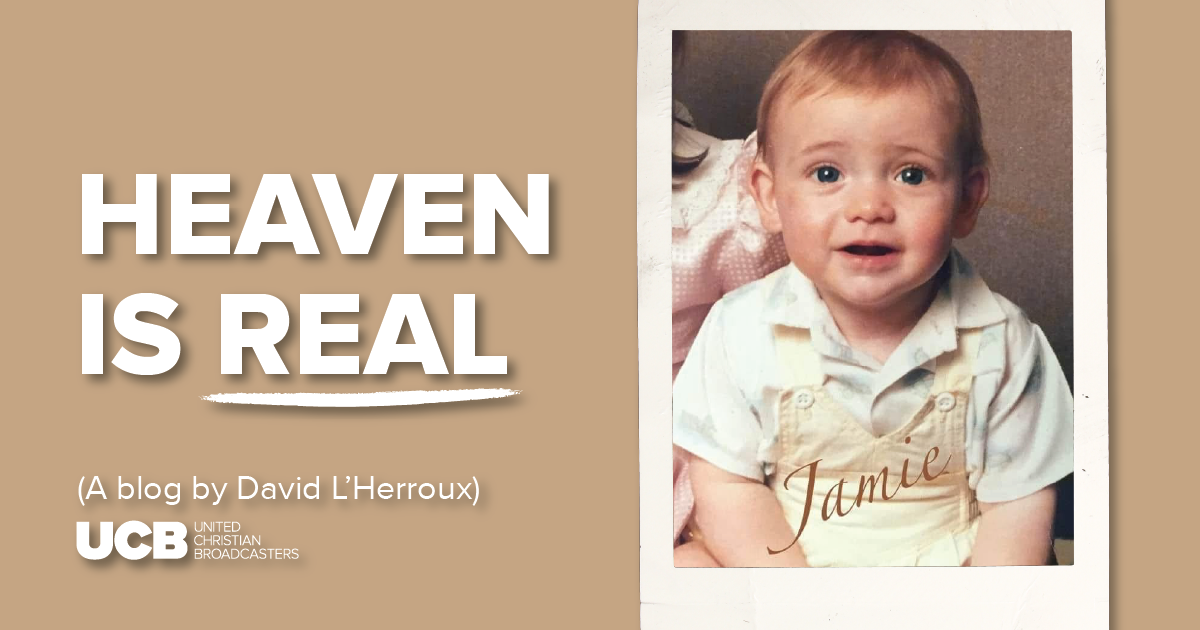
In 1988, the unthinkable happened in our family when our 13 month old son Jamie, died suddenly. In a blur of blue lights, we raced behind the paramedics as he was rushed to hospital but when we arrived, we were told there was nothing the doctors could do. Jamie had gone to be with the Lord. Later that day as I stood in the Chapel of Rest at the hospital, my heart shattered, I cried out to God and asked Him to bring Jamie back. In the quiet, I felt God speak into my spirit: “He will not come back to you, but you will go to him one day.”

I later learned these were the words God spoke to King David after the loss of his own son. Over the years, those words have given me immense hope and comfort because they remind me that there is a world beyond this one. I believe we will see Jamie again one day. Today, January 16th would have been Jamie’s 38th birthday.  It is almost hard to believe that so much time has passed, as the events of that day still sometimes feel like they happened just yesterday. Throughout the years we have been sustained by one miraculous truth – heaven is real.  If you have lost someone you love, you will know the heartache of earthly loss but I want to encourage you to know and believe that Heaven is not a myth, it is a very real place.

The Scriptures provide a wealth of details about Heaven. It is where God lives (Psalm 23:1) and was designed for us. God doesn’t need a place to live; He is self-sufficient. However, He made Heaven for us. God’s heart was to create a home and a family, and He loves us so much that He has adopted us into His family so that we can spend eternity with Him. But He also gave us a choice. Where we spend eternity will be determined by the choices we make in this life—whether we choose to accept the free gift of Jesus or not.

What is Heaven like?

Jesus said that He would go to prepare a place for us (John 14:3). In Revelation 22, we are given a beautiful picture of a place with trees and a river “clear as crystal” flowing down the middle of the street. Heaven is also described as a place where God’s people will live with Him forever, and where all tears, grief, pain, and death will be wiped away. It is a place where the “old order of things has passed away” (Revelation 21). If you are like me, sometimes you might think: “Lord, it’s dreadful down here…” But the thought of a perfect world to come with no pain gives us great hope.

Living for Today

While we look forward to eternity with great expectancy, it is important to live with purpose while on this Earth—to be fully present in the life we have been given. It is ok to dream and look forward to a day when we can shed our “suit” of flesh and blood, but we should not forget that God has a purpose for us now.

In 2 Corinthians, Paul says that we are ambassadors of Christ. If I was a political ambassador, it would mean that I had an important purpose but that ultimately, I was a citizen of another country. The same is true when we are Christ’s ambassadors. Our appointment and purpose are from God, and we have a heavenly assignment to speak God’s heart to the country and situation we are currently in.

If you are in a difficult situation or have lost someone you love, can I encourage you: Heaven is real. As believers, it is a place we can look forward to with expectancy. I believe that I will one day be reunited with both my son and grandson. But until that day, let’s live for the here and now.

Let’s make it our goal to share this truth, this hope, with as many people as possible until the day God finally calls us home.

Christianity

Seizing the Power of a Fresh Start

The Flow of Time

A New Year marks the passing of time – a reminder of the ongoing flow of our lives. Each tick of the clock brings us closer to our dreams or further from our regrets. Embrace this crossing over from one year to the next, for it carries with it the lessons of the past and the promise of the future. As you step into 2025, let time be your teacher, not your enemy. Reflect on the moments that shaped you and use them to fuel your growth: “Teach us to number our days, that we may gain a heart of wisdom” (Psalm 90:12).

Aligning Your Priorities

A New Year is an opportunity to realign your priorities. What truly matters to you? Is it family, health, personal growth, ministry, or something else? Take this time to evaluate where you are investing your energy and ensure it aligns with your core values. Let 2025 be the year you focus on what truly makes your heart sing: “But seek first the kingdom of God and His righteousness, and all these things will be added to you” (Matthew 6:33).

Uncovering Your Purpose

Purpose gives life meaning. As you enter a new year, reflect on what drives you. What are you passionate about? What impact do you want to have on the world? Use this moment to refine your sense of purpose and let it guide your actions throughout the year. But remember, your purpose doesn’t have to be grand; it just needs to be true to who you are: “For I know the plans I have for you, declares the Lord, plans for welfare and not for evil, to give you a future and a hope” (Jeremiah 29:11).

Crafting Your Vision

A clear vision will transform your life. Think about where you see yourself by the end of 2025. Visualise your goals and the steps needed to achieve them. This is your opportunity to redefine your life’s vision, to dream bigger and reach higher. Let your vision be a beacon that illuminates your path and guides your decisions: “Write the vision; make it plain on tablets, so he may run who reads it” (Habakkuk 2:2).

Setting Meaningful and Realistic Goals

Goals give structure to our expectations. Take this opportunity to set new, worthwhile goals for the year ahead. Whether they are personal, professional, or spiritual, ensure they are meaningful and realistic. Break them down into smaller steps and celebrate each milestone along the way. Let 2025 be a year of growth, progress, and accomplishment: “Commit to the Lord whatever you do, and He will establish your plans” (Proverbs 16:3).

Embracing a Fresh Start

The past is a teacher, not a jailer. Take the lessons learned and leave behind the burdens of the past year. A New Year is a chance to bury past mistakes, regrets, and failures, and to step into a future filled with hope and possibilities. Embrace the fresh start that 2025 offers and move forward with a renewed spirit and determination: “Behold, I am making all things new” (Revelation 21:5).

May this New Year bring you clarity, purpose, and a renewed sense of destiny. Embrace the opportunities that come with the passing of time, and let 2025 be your year of transformation and unprecedented growth.

Christian Media, Christian Radio, Christianity, Faith, Hope

UCB – Building for Growth: A Message from UCB’s CEO, David L’Herroux

I am thrilled to share an important update with you as we open a new chapter in the story of United Christian Broadcasters. Since God clarified our vision through a prophetic insight in 2016, I have felt deeply moved by His calling and guided by what we now call, the ‘iSee’ vision – a vision to witness an unprecedented move of God across the UK and beyond. This vision is at the heart of everything we do at UCB, inspiring and driving me every day.

As CEO, my role over the years has grown to encompass the oversight of UCB’s work across Europe and South Africa, and it has been a privilege to serve in this expanded capacity. After much prayer and reflection together with our UCB Board, we strongly feel that within my role as CEO, it is time to focus more fully on an apostolic ministry role, sharing our broader vision and ministry and deepening our impact to our much-needed world. This shift means I will be stepping back from the daily operations of UCB to concentrate on this wider aspect of our mission.

To support this transition, I am delighted to announce that, as of November the first, Mark Oakes has taken on the role of UCB’s Managing Director. Mark brings a great background to this position, with 17 years of experience as the UK Director for Christ for All Nations (CFAN). Over the three years he has been a valuable part of UCB, first as a Trustee on our Board and most recently as our Director of Communications. Mark has a true heart for revival and a deep connection to UCB’s vision, and I am confident he will lead our daily operations with wisdom, dedication, and passion.

In the coming months, Mark and I will work closely together to ensure a seamless transition, keeping UCB on course as we pursue God’s calling. I invite you to join us in prayer for Mark, his wife Kerrie, and their family, as well as for our entire UCB team, as we step into this new and exciting chapter together.
Thank you for your unwavering support, your prayers, and your partnership. This new season represents a significant milestone for UCB, and I believe it will be a season of extraordinary growth and impact. Together, we are building for the future, empowered by a shared mission to bring God’s hope to a world in need

David L’Herroux
Chief Executive

Christianity

When everything is changing – trust God

We are in a season of political change. We saw the UK begin to change last week after the election of a new Government and Prime Minister. In the US too, there is an election later this year and in my home country of France, there is also a lot of political movement and change.

I am pleased that we live in a democracy and that we each have the ability (and responsibility) to vote, but now we need to consider how we should respond to the outcome of the decisions made. How can we ensure unity in the church and keep positive relationships when our opinions can be so different? The same applies to the decisions we’re confronted with on a daily basis.

Choose who you will serve

We must remember firstly who we serve. In Joshua 24:15, Joshua commanded the people to ‘Choose you this day who you will serve.’ He told the people that the choice was up to them; it was their decision, but he ended by saying ‘As for ME and MY house, we will serve the Lord.’ Although as believers we ultimately serve the Lord, He gives us the choice and allows us to decide who we are going to serve. I believe this is a very intentional verse. It encourages us to make our choice and then have the courage and commitment to stand by what we believe.

Agree to disagree

In life we are confronted by choices on a daily basis, and the choices that we make today will affect our tomorrow.

There will always be disagreements among friends and family over the choices we make. But I believe some of these disagreements could be avoided if we tried to listen more. Too often in discussion, we are set on persuading the other person to see things as we see them, and we do not stop to listen. If we don’t listen, we won’t hear others’ views. And who knows, perhaps the opposite side might have a good point to make? If we all agreed on everything, it would be a very boring world. It is fine to say ‘I don’t see it, I don’t understand it, but I respect how you feel.’ For me, my relationships with family and friends are more precious than my argument.

Who should have the final word?

We all like to have the final word, but the final Word comes from God.

The Bible is God’s divine instruction manual, and it tells us how to live our lives according to God’s will. As I have said before, if we bought a new phone or gadget, we would always read the instruction manual so that we knew how to operate this new gift in the best possible way. The same is true of our lives and God’s Word – it tells us all we need to know about how to live a life aligned with God’s plan.

Even if we make wrong choices in life and create a mess through those choices, our failures are not fatal – provided we are willing to acknowledge them. God will always be there to help us.

Whatever situation you find yourself in today, and however you are feeling – whether it is fear or excitement – it is important to remember that God has a plan: ‘A plan to prosper you, not to harm you, a plan to give you hope and a future’ (Jeremiah 29:11).

Christianity

The power of telling your story

I believe that we each have a story to tell, and I think it is important that we are ready (at any time) to tell it, both in words and in the way we live our lives.

In Mark 5, the story is told of Jesus healing the daughter of Jairus. She had been very sick, and as the daughter of a religious leader, it is likely she would have been well-known in her community. But as Jesus arrived at her home, it was too late. She had already died.

All around and inside the house were mourners, people yelling and crying about the loss of this little girl. Jesus was confronted with the reality and finality of human death. He immediately told all the mourners to leave the house, and then he took the girl’s hand and restored her back to life. And then in a puzzling verse, Jesus told the family to ‘tell no one’. It was not just a suggestion, it was a command.

In other parts of Scripture, we are told about the power of testimony, so why would Jesus command the family to keep quiet? I read this story again recently, and I believe there is a simple answer. As Jairus was the leader of the synagogue, he and his family would have been well-known and respected in the community. When Jesus arrived at their home, the house was already full of mourners, so the locals already knew that she was dead. So when Jesus brought her back to life, there was no need to tell anyone. She was a living, breathing testimony. She was the story.

Saint Francis of Assisi once said: ‘Preach the Gospel, use words if necessary.’ Many have debated this saying, but personally, I believe it means that when we have been transformed by the power of God, our lives are a walking, living testimony. We can use words to tell our story (and it is important to do so), but the words need to be backed up with evidence of a life which is changed. We can all debate words and philosophies and theology, but no one can argue with a story and a life which has been transformed.

When Jesus healed a blind man in John 9:13-25, the Pharisees questioned the man to ask how this had happened. They wanted to debate theology with him, but he simply replied: ‘I was blind, but now I see.’ Who can argue with that?!

We all have a story to share. Some may have been healed and set free or restored. For others, it may be that they were aware of God’s presence in a difficult time, but I believe we should always be ready to demonstrate and tell our story.

Here are some practical ideas:

Tell the truth

This might seem obvious, but it is important to not tamper with or change the details of the story. It can be tempting to add (or take away) details, but in doing so, we can remove all the power. Tell your story and allow God to add power to your words.

Tell your story in chapters

Imagine your life story as a book – full of different chapters. You do not have to tell the full story, but you can share different chapters at appropriate times. Depending on who I am speaking to, I use different ‘chapters’ of my testimony. Sometimes I will share the story of how I, as a rebellious young man, came to England and met God powerfully. Or I might share about the time we had no money or petrol in the car, but we prayed and God provided in a miraculous way. Or, as I have shared here, I might tell the chapter when we lost our son Jamie. You do not have to tell the whole story. The individual chapters can be just as powerful.

Some stories don’t end well

In 1988, a few weeks before we lost our son Jamie, our friends’ daughter Sarah was taken very seriously ill with meningitis. I will tell her story in a future blog post, but God stepped in and healed Sarah in a miraculous way. A few weeks later, we lost our son, and it led to many questions about why God would heal one child and yet take another. Even though our family’s story did not end the way we wanted it to, it is still a story of God’s amazing provision and faithfulness. Even if your story did not conclude the way you wanted it to, you can still tell of how God sustained you in the difficult times.

The enemy will try to stop you.

I believe the enemy knows the power of testimony. The original Hebrew root of the word ‘testimony’ means to ‘do it again’.  In other words, when we share our testimony, we are literally encouraging others to believe that God CAN ‘do it again’. The enemy will try to quench the power of stories, and he will try to stop you from sharing yours, but when you tell your story, you are saying to the world ‘God is alive and He is at work in my life.’ There is huge power in that.

I believe that God wants to ‘do it again’. Do you have a story to share? Why don’t you start to tell it?

p.s UCB has recently produced Power of the story – a brand new book with 30 testimonies of lives that have been changed for good by the power of God’s Word. You can get a *free copy at www.ucb.co.uk/storybook (*P&P applies)

If you have a story to share, why not get in touch? www.ucb.co.uk/stories

Christianity

Steward your capacity in the workplace

Praise God that we have all been given gifts, talents and abilities in order to multiply the opportunities that God presents to us throughout our lives. And it’s important to recognise that faithful stewardship will lead us to discover the value in every opportunity. It is when we value our God given assignment, take it seriously and are faithful in the little things that He will enlarge our capacity by positioning us to steward even greater things. Here is what Jesus said: ‘Well done, good and faithful servant; you were faithful over a few things, I will make you ruler over many things’ (Matthew 25:21 NIV).

Many years ago, when I was a janitor in a corporate organisation, I discovered a revelation that changed the course of my working life. I discovered that once you take a new job it really takes some time to settle in and know every aspect of it, however, after a while it is very evident that once you are totally confident in the execution of your job role, you discover your extra capacity. Observing my peers at that time it became clear to me that anyone in the working place will after a while release a minimum capacity of 20%.

However, the big question is, how best to steward this extra capacity to honour God as Christians in the workplace. Here are some principles that I have learned and have become part of my working life since then and until now: 

  1. Work is God’s call for all. The first thing that God gave mankind is WORK (see Genesis 2:15 NIV). We have been called to work and it’s a privilege to know that through work we can contribute to society.
  1. God is the ultimate boss. Colossians 3:23-24 says: ‘Work willingly at whatever you do, as though you were working for the Lord rather than for people.’
  1. God’s standards are far greater. I can tell you that God’s standards are far higher than any standard set by men/women, therefore, although I have great respect to all authority over me, I must confess that my real boss has always been and will always be God my Heavenly Father. Colossians 3 tells us, ‘And whatever you do, whether in word or deed, do it all in the name of the Lord Jesus, giving thanks to God the Father through him. (v. 17 NIV).
  1. God expects us not to waste our capacity. In the early period of my working life in retail I learned to invest my spare capacity by making myself available to other departments to help them, especially in time of crises, which increased my knowledge in the retail field, making me ready and available for new opportunities. So, if you recognise you have spare capacity, my advice to you is make sure you invest it wisely.
  1. God’s Word is the Manual for success. Praise God that the Bible is a library of 66 books, sprinkled with great principles for success even in the workplace. And I can tell you that it was the Bible used as my daily manual that led me to reach the heights that I never thought possible, such as the Boardroom, from starting my working life as a janitor.
  1. God expects total commitment. What does it mean to commit your works unto the Lord? ‘Commit to the Lord whatever you do, and he will establish your plans.’ (Proverbs 16:3 NIV). In other words, it is to completely give our work over to God while depending on Him. When we ‘commit’ our works to the Lord we totally depend on God in our work, and He will help us to discover and establish His plans through His divine purpose. So, remember, commitment is not an option but a necessity and here is a promise worth standing upon: ‘Trust in the Lord with all your heart, and do not lean on your own understanding. In all your ways acknowledge him, and he will make straight your paths’ (Proverbs 3:5-8 ESV).  

Stewardship requires faithfulness. Why? Because success never happens overnight and God requires us to be good stewards by making sure that we are investing in our extra capacity. The psalmist tells us: For exaltation comes neither from the east Nor from the west nor from the south. But God is the Judge: He puts down one, And exalts another’ (Psalms 75:6-7 NKJV). So, beware and let’s be smart by being a good steward even in the work place.

Christianity

Can they tell?

In Acts 4 we are told that, ‘When they saw the courage of Peter and John and realised that they were unschooled, ordinary men, they were astonished and they took note that these men had been with Jesus’ (v. 13 NIV).

The real question for us today is; how did they know? Here we have two different men hanging around together, one called Peter who, in spite of his strong character and saying that he would never leave Jesus, denied Him not just once but three times; and the other called John who had a pretty steady and consistent character. On that day the council, the religious leaders, perceived something that set Peter and John apart from the religious people of their day.

This provoked me to ask the question, as the world looks upon me, upon us, WHAT CAN THEY TELL when we are at home, at work, in our community? So, to help us navigate this world in which we live today, in these very challenging times, let’s look at the characteristics of Peter and John that set them apart from others.

  1. They reflected the compassion of Christ

The biblical definition of compassion is: ‘the awareness of the need of others with a compelling desire to eradicate their need’.

Therefore, they demonstrated their compassion by a) going together to the temple to pray, in other words to stand in the gap for others and intercede on their behalf (as written in Acts 3:1: ‘Now Peter and John went up together to the temple at the hour of prayer’) and b) in the power of the Holy Spirit the man stuck at the temple gate called Beautiful was completely healed.

Let me break down further my understanding of compassion:

–         Compassion is not found in religion but in relationship.

–         Compassion is being ready to get involved to help others, it’s what I would call compassion in action. These two men stopped and focused their attention on a man in desperate need. Peter spoke to the man with authority, gave his right hand, lifted him up on his feet and the man walked away completely healed.

–          Compassion also has a cost. Acts 4 tells us that they were arrested, ‘They seized Peter and John and…they put them in jail until the next day‘ (v. 3 NIV).

May we all reflect Christ’s compassion as we journey this life in our endeavours to affect the lives of desperate people around us, that the world will recognise not only that we have been with Jesus but that Jesus lives within us.

  1. They display tremendous courage and boldness  

Acts 4: declares, ‘Then they called them in again and commanded them not to speak or teach at all in the name of Jesus. But Peter and John replied, “Which is right in God’s eyes: to listen to you, or to him? You be the judges! As for us, we cannot help speaking about what we have seen and heard.”’ (v. 18-20 NIV).

Their courage and boldness are an example to us today. As they stood firmly on their conviction to not keep silent but to stand for what was right – so should we! May we ask God to enlarge our capacity to be filled afresh with the power of His Holy Spirit to be courageous and bold, to stand against the attacks of the Enemy.

  1. They were totally committed to serve

‘Commit’ is a word that in Hebrew literally means ‘to roll’. When we ‘commit’ or ‘roll’ our works to the Lord, we are offering everything we do completely to Him.

Not only were they committed to Jesus but also to one another, as they were partnering together in the gospel. Commitment is not to be taken lightly; here is God’s promise to us today ‘Commit your way to the LORD, Trust also in Him, And He shall bring it to pass. He shall bring forth your righteousness as the light, and your justice as the noonday’ (Psalm 37:5-6 NKJV).

It is also important to note that their commitment was demonstrated in their unity. Here is what they did: they praised the Lord together, prayed with great boldness together, were thirsty for God’s Word to be manifested amongst them together. God declares in His Word; ‘where there is unity, God commands the blessings’ (see Psalm 133:1-3 NIV), which releases His manifested presence through boldness and courage in the Holy Spirit. Acts 4 tells us what happened: ‘After they prayed, the place where they were meeting was shaken. And they were all filled with the Holy Spirit and spoke the word of God boldly’ (v. 31 NIV).

So, it’s not surprising that the religious people of their day ‘took note that these men had been with Jesus’ (Acts 4:13 NIV). May this be said about ALL of us as we continue to serve God faithfully in whatever capacity we have been called into.

Let me leave you with this question; as the world looks upon us ALL today, CAN THEY TELL THAT WE HAVE BEEN WITH JESUS? If not, let’s reconsider our priorities and make sure that we spend time with Jesus and never, ever forget that each one of our lives is a billboard to the world in which we live in. So, WHAT MESSAGE ARE WE PROMOTING?