Christian Media, Christian Radio, Christianity, Devotional, Faith

Right People, Right Place! – Part 2

Let’s look at The Five Cs of Recruitment

It’s vital to make sure that people in the workplace are sitting in the right seat in relation to their role. Too many people today are on the right bus but in the wrong seat. And when that happens, even good people can end up toiling rather than truly working.

If we are to enjoy life to the full, that must include experiencing work as God intended, purposeful, fulfilling, and aligned.

So, let’s look together at what I believe is a godly and practical strategy for recruiting the right people into the right roles at the right time. Here at UCB, we refer to this as the five Cs of recruitment.

Their purpose, from a leadership perspective, is to help ensure that people are sitting in the right seat and able to fulfil their God-given assignment. The benefit for employees is that they are able to give their best, driven by purpose, not merely performance.

1. Calling

Calling asks the question: Do we believe we are living out our life assignment – the work God has uniquely entrusted to us?

God never asks someone to do something without also providing what is needed to do it well. In Scripture, calling is often accompanied by God’s equipping, what the Bible refers to as anointing. This is not a mark of status, but a sign of empowerment for responsibility.

David was called, then anointed, and only later appointed. God’s order matters. Calling is normally confirmed over time through character, competence, and community discernment. It is a process through which God shapes us into who He desires us to become.

2. Character

If we are to become the people God desires us to be and the kind of people others can trust and follow, we must pay close attention to our inner life.

Reputation is what others think of us; character is who we truly are.

We may not always control the situations we face, but we always have a choice in how we respond. Scripture places enormous weight on character, so much so that the Bible could rightly be described as a manual for godly living. It is filled with both positive and cautionary examples, given for our learning and growth.

God cares deeply about who we are becoming, not just what we are achieving.

3. Competency

Competency matters, even in ministry.

Competency is the ability to apply knowledge and skills effectively to achieve the desired outcome. While character is foundational, calling without competence can limit impact.

As I often say, if I needed major surgery, choosing between a surgeon with excellent character but no competence, and one with competence but no character, would not take long. This is not to diminish character, but to highlight that both are essential.

Character is who we are; competence is what we can do. And whatever we are called to do should be done wholeheartedly and excellently. If we want to grow in our assignment, we must also be willing to sharpen our skills.

4. Culture

Culture shapes behaviour.

At UCB, we seek to cultivate a kingdom culture – a values-based way of working where biblical principles shape our purpose, priorities, and practices. Jesus summarised this clearly:

Love God wholeheartedly and love your neighbour as yourself (Luke 10:27).

We describe this as our PPF culture – Putting People First. That means serving our audiences well but also serving one another internally as we ourselves would wish to be served.

Healthy culture isn’t just about what we believe – it’s about how we treat people every day.

5. Chemistry

Finally, chemistry matters.

Chemistry speaks to how people relate, collaborate, and function together. Good chemistry strengthens trust, improves communication, and enhances team performance. Without it, even capable teams struggle to flourish.

That’s why fit matters. Being in the right role, with the right people, enables individuals to give their very best, not just completing tasks, but becoming who God created them to be.

Let me conclude 

When people are misplaced, they may still perform, but often at the cost of joy and fulfilment. When people are well placed, work becomes life-giving rather than draining.

So, as you pray for vacancies to be filled, call them in just as Samuel called David.

And remember this pattern:

God calls. God equips. And, in time, God appoints.

May we be leaders who discern wisely, place people well, and help others enjoy their God-given work rather than merely enduring a job.


Christian Media, Christian Radio, Evangelism, Faith, Devotional

Right People, Right Place!

Recruiting and placing people well is one of the greatest responsibilities leaders carry and one of the most challenging.

Too often, recruitment becomes reactive rather than reflective. Roles are filled quickly, urgency outweighs discernment, and capable people end up sitting in the wrong seat. The result is familiar: frustration, fatigue, and far too many people toiling when they were created to work.

In this short series, Call Them In, we explore a biblical and leadership-informed approach to recruitment, placement, and purpose. Drawing from the story of Samuel and David, we reflect on the principle that calling often precedes appointment and that discernment, process, and community are essential in recognising who belongs where.

Across three parts, we will:

• Rediscover the difference between work and toil

• Explore a practical framework – the five Cs of recruitment

• Reflect on leadership as stewardship of people, not just positions

Whether you are a leader responsible for placing others, or someone discerning your own next step, this series invites you to pause, reflect, and ask deeper questions about purpose, alignment, and flourishing.

Because when people are placed well, everyone benefits.

Right People, Right Place! – Part 1

The prophet Samuel had David brought in; in other words, he called him in.

“Then the LORD said, ‘Rise and anoint him; he is the one.’ So Samuel took the horn of oil and anointed him in the presence of his brothers, and from that day on the Spirit of the LORD came powerfully upon David.”

(1 Samuel 16:13 NIV)

Recruiting the right person can be very challenging. Some time ago, as we were seeking to fill a vacancy here at UCB, I sensed the Holy Spirit impressing on me a simple but powerful thought: “Call in the person needed for this assignment, just as Samuel called for David.”

This was not a suggestion to bypass good process or responsible governance, but a reminder that discernment must sit alongside decision-making. As we prayed, reflected, and followed due process, the right person responded and we were deeply encouraged to see God at work through both spiritual attentiveness and practical wisdom.

You see, God knows the right person for the right place at the right time to do the right work, just as He knew David. Scripture consistently shows us that God’s calling often precedes public recognition. At the same time, calling is normally confirmed through community, character, and competence. God’s guidance is rarely isolated; it is discerned together.

Not only does God prepare people with the abilities needed for their assignment, but He also equips them inwardly for the responsibility they are to carry. Any sense of God’s anointing must always be held alongside accountability, fruitfulness, and integrity.

So today, if you are seeking to fill a vacancy, don’t simply rely on instinct or urgency. Prayerfully discern, involve wise counsel, and trust that God will help you recognise the right person for the assignment. When discernment and process walk together, leaders are far less likely to be disappointed.

Work Before the Fall, Toil After the Fall

Before we explore what we call here at UCB the five Cs of recruitment, it’s important to understand a foundational principle: there is a difference between work and toil.

Have you ever noticed that the word work appears in Scripture before the fall, while the word toil appears after the fall?

Genesis 2:15 tells us that God placed Adam in the Garden of Eden to work it and take care of it. Work was not a punishment, it was the very first assignment God gave humanity.

After the fall, however, Genesis 3:17 introduces toil. Toil is described as painful, fatiguing, and burdensome effort. It is not effort itself that defines toil, but effort disconnected from purpose and alignment. This goes a long way toward explaining why so many people experience deep dissatisfaction in their working lives.

Your Job Is Not Your Work

Your work is not your job.

A job is something you are trained for, paid for, and one day may leave behind. A job is often temporary. Your work, however, is what you were created for. It is the unique contribution you bring to the world through your gifts, values, and calling.

Work is not merely about productivity; it is about becoming. From a biblical perspective, work is the expression of who God created you to be. Toil, by contrast, often occurs when someone is capable and hardworking but misaligned with their true assignment.

This does not mean that meaningful work is always easy. Scripture is clear that even those living fully within God’s purposes experience challenge and perseverance. The difference is that aligned work, though demanding, brings fulfilment, while misaligned work drains life.

That is why I often say to my wife Jackie that while one day I may retire from paid employment, I can never retire from what God created me for. I can step away from a role, but not from my purpose.

A Leadership Responsibility

Research tells us that around one third of our lives, approximately 90,000 hours are spent working. That makes leadership decisions around recruitment and placement profoundly significant.

When leaders help people step into roles aligned with their design, they are not just filling vacancies, they are stewarding lives. When people are consistently placed out of alignment, even the most capable individuals can end up toiling rather than working.

This is why discernment in recruitment matters so deeply.

A Question to Reflect On

So let me leave you with this question:

Are you working – becoming what God created you to be or are you toiling, enduring a role rather than living out your true assignment?

And as leaders, are we creating environments where people can work with purpose, or incidentally placing them in positions where toil becomes inevitable?

Next time, we’ll explore what we call here at UCB the five Cs of recruitment, a framework designed to help leaders discern wisely and place people well.

Until then, let’s be intentional about ensuring that we are truly working, not merely toiling.

Christian Media, Christian Radio, Christianity, Devotional, Evangelism, Faith, Healing, Hope, Miracles

Don’t despise ‘small beginnings’. (Zechariah 4-10)

In December 2013, I attended the funeral of a dear lady who was 99 years old. She had served God faithfully in the church (which my brother pastors in France), and for many years, her heart’s desire was to see a revival. In almost every meeting, her voice could be heard: ‘Lord, send yet again, a revival!’

I had the privilege of attending her funeral, and it was a truly remarkable occasion where the presence of God was felt so powerfully. My brother Daniel said to me ‘You need to preach in church on Sunday’, and the following weekend, which was the last Sunday of 2013, as I spoke, we began to see and feel the expectation level in the church rising up in an unprecedented way. This led to the beginning of a mighty move of God, and over the next few years, this move of God would lead to many people becoming saved and experiencing healing.

Sometimes I look back and wonder if the funeral of our dear 99-year-old friend was actually the spark that lit a flame. Although she did not live to see it, her faithful prayers over the years led to a new move of God.

I have been thinking about this recently as I have been closely watching world events.

All around us, large churches, which have seen 1000s of members walk through their doors each week, have had to go ‘back to basics’ and meet in small, sometimes online groups. Throughout the Covid crisis, we have been forced to look at how we do things smaller, rather than how we make them bigger.

And we are learning how to not despise ‘small beginnings’.

Just like our 99-year-old friend in the church, her prayer life may have seemed ‘small’ to some, but I believe her faithfulness (even to the end of her life) led to something very big being ignited.

Please don’t get me wrong. I love to see churches filled with many members, but I also believe that there is Biblical precedent for small gatherings too.

In Mark 5, Jesus goes to the home of Jairus to pray for Jairus’ daughter who was very sick. When Jesus arrived there, the Scripture tells us that there were many people present, many of whom were crying loudly and wailing. And Jesus quickly sent them out of the house so that there were just a few left.

It was in that very ‘small’ moment that an incredible miracle occurred, and the little girl, who by this point was dead, was now brought back to life. Often times, we can devalue and overlook what is seemingly little.

As Coronavirus has impacted churches all across the world and forced them back to ‘small beginnings’, it would be easy to see this as a setback, but what if this is a divine strategy to usher in a move of God like we have never seen before?

Matthew 18:20 says ‘Where 2 or 3 are gathered in my name, there I will be with them.’

The presence of God is just as powerful and real in a small gathering as He is present in a large gathering.

Even here at UCB, our wider team (of more than 100 staff and volunteers) is not able to meet together in person, but I am hearing stories of UCB teams meeting together online, sharing Bible studies, praying for each other in new ways.

I firmly believe that for us as an organisation, we will not be ‘returning to normal’. This pandemic is forcing us to think in new ways and to not ‘despise small beginnings’.

Throughout history, God has used small groups of people to ignite something big. From the disciples (just a group of 12 men) to people like my praying friend, small groups of faithful people have been powerfully used by God to usher in great moves of the Spirit.

If you are part of something ‘small’ today, can I encourage you to have a bigger vision for it? By embracing something small and allowing God to use it, you could be part of ushering in a new move of God.

DLH-blog-Smallbeginnings-images

Christian Media, Christian Radio, Christianity, Christmas, Devotional, Faith, Healing, Hope, Miracles

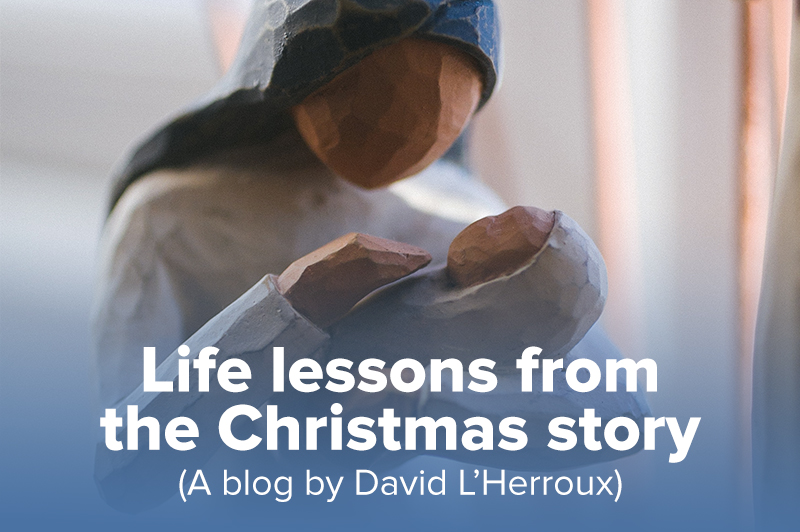
Life lessons from the Christmas story

I have been thinking this week about the story of Mary.

Mary, the mother of Jesus, was given an extraordinary assignment, and if you have a dream and a vision for the future, her life story is a great encouragement.

Your past doesn’t matter

God gave Mary a special job, despite the fact that by human standards, she was too poor, too young and from the wrong part of town. God could have gone to the palaces to find a ‘suitable’ mother for the Messiah, but instead He chose an unknown girl from a poor village. To me, this is a reminder that our past, our background, or our culture is not a problem for God. When I arrived in the UK, I was a young foreigner, but God took hold of me and changed my life in unexpected ways. We are all born with a God-given purpose, and God loves to take insignificant people (in the world’s eyes) and birth significance into their lives.

A vision for the future can make you feel hopeless

This might seem like a strange thing to say, but often when God gives us a dream, we can feel hopeless. How will God accomplish such a thing? Is it possible? Have I imagined this? And yet, just like Mary, when God speaks to us and gives us a vision, His Holy Spirit can empower us, take us further than we could ever imagine, and make the impossible possible in our lives.

His Holy Spirit is bigger than our intellect, our talent and our ability. His Holy Spirit is bigger than our past, our culture, and our logic. But like Mary, we have to stop arguing with our reason and thinking and instead say ‘God, if you said it, I will align my will to your will.’

You have to step up

With any vision, talking about it or thinking about it won’t make it happen. When Gabriel visited Mary after the initial shock, she got up and went to visit Elisabeth. That was her response. And likewise with us, we have to form a response and begin to move forward into what God has called us to do. We might not immediately see results, but it is important to live in a culture which cultivates it. Surround yourself with people who will speak life into your vision, and like Mary, rub shoulders with people who will make that dream ‘leap’ within your spirit.

Be patient

Mary had to wait 9 months to see the fulfilment of the vision God had given her. You and I may have to wait much longer. The process of waiting for the dream to come true can be a time of real preparation.

Here at UCB, we believe God has given us a vision for an unprecedented move of God which will sweep the UK and beyond. We haven’t yet seen this (although we believe we are seeing small signs), so instead, we are preparing ourselves, our infrastructure, and our organisation to be ready for when it happens and so that we are able to support the Church 24/7, 365 days a year. Mary had to prayerfully get ready for the arrival of Jesus. She knew what was promised would come true, and so she began to prepare for what she knew was to come.

Don’t despise small beginnings

The arrival of Jesus was a low-key affair. There was no room at the inn for the newborn king. There was no fanfare from the palaces. There was no state announcement. In fact, if it were not for the angels who sang and the light of a star, His birth may have gone unnoticed for a long time. Jesus himself was placed in a feeding manger in rags: the most unassuming, ‘small’ beginning for the Saviour of the world. And yet, those small, humble beginnings led to the plan of salvation for all of mankind.

It’s important to remember that great things (just like oak trees) can have the smallest and most humble of beginnings.

Can I encourage you today that if you are waiting for God to fulfil your own vision and dream, be faithful to what you believe God has shown you. Use the time positively to prepare spiritually (and physically), and surround yourself with people who will help to keep you accountable.

If God has said it, it will come to pass.

Life lessons from the Christmas story

Christian Media, Christian Radio, Christianity, Devotional, Faith, Healing, Hope, Spiritual healing

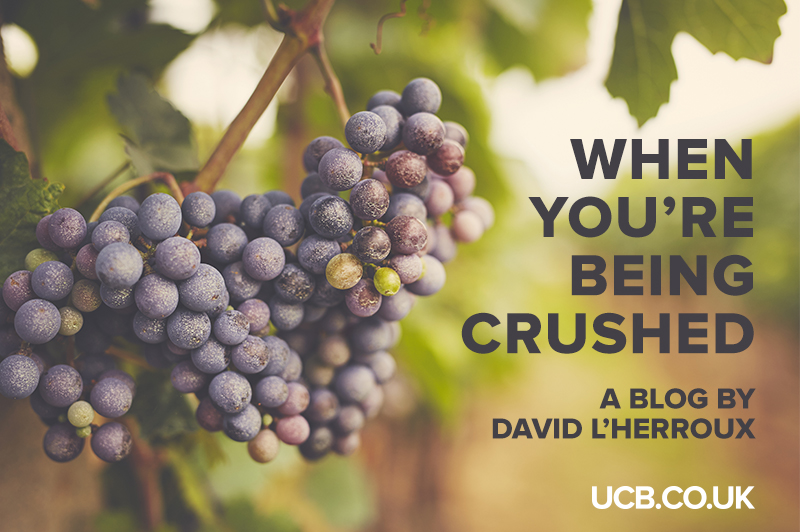
When you feel crushed…

My family and I spent our Summer holiday in the Loire Valley, an area famous for its vineyards and wine making.  During my time there, I started to think about the journey of the grape and the long process it goes through from vine to wine glass. I felt God challenge me about that journey and how it could apply to the long process we each go through in life to become who God would have us to be.

If I was to imagine myself as a grape, this is what the process might feel like:

It is a fresh sunny day in early spring, and I am hanging on the vine with a bunch of others, covered with morning dew. I feel like I am part of something, and life’s prospects seem good, but then suddenly, the rain and hail hits.

I try to hide behind the vine leaf to shelter from the storm, but it is hard to keep dry, for the vine has been pruned back, and I am now exposed, unable to hide.

Where has the sun gone? Is this Spring or Winter? No one told me this would be so hard! It feels like hell. Surely this will be over soon?

And then after a turbulent and stormy and wet Summer, now Autumn has come. Early morning early frost settles on the vine, and again I found myself wanting to shelter, but then before I know it, it is harvest time, and suddenly, I am being picked from the vine.

There are loud engines and machines all around, and I find myself being ripped from all that is secure and safe.

I am put into a large, dark, smelly container and then turned into another metal large box, where I am being pressed and squeezed. My very shape itself is being moulded into something else, and all I can feel is intense pressure and deep, deep crushing. It hurts!

Finally, just when I think it is over, I am then poured into a wood barrel and wheeled into a dark cellar. Surely this is it? All this crushing, this pain, this change… surely I am now ready and finished? This must be the final stage which will last a few hours, no?

But no, this process takes a few years, and then something remarkable happens. Suddenly, a light shines into the darkness, and the wine is being tasted. ‘It is ready’, I hear the voices cry as they pour me into a much smaller container, a bottle.

There’s a label on the outside of the bottle to describe what I now am, but just when I think I am about to be released into my purpose, I am once again now laid carefully on a shelf to wait and wait and wait.

It seems as though the waiting goes on forever, but then once again, the light shines into the darkness, and I am being gently handled. The cork on the bottle is carefully removed, and I am being poured into a large glass. I can hear all the voices around the table, and I can hear the host of the party, saying ‘Try this fine wine… this is the best I have ever made.’

Everyone is smelling and swirling and tasting and agreeing with the host that this long process has been worth it all. All the seasons, all the crushing, the pressing, and the waiting has produced something that not only looks beautiful but which also smells and tastes wonderful.

If we apply the picture of a grape to our own lives, I am sure we will see many similarities.

We each walk through many seasons, many of them very painful, which at times feel as though they will never end.

And yet, through the whole process, God is making something beautiful and precious out of everything we go through.

What season are you in today? And if you were squeezed, what aroma, what taste would come from you? My prayer is that we can stand with Paul, who said ‘But I will rejoice even if my life is poured out like a liquid offering to God, over your sacrificial and surrendered lives of faith. And so no matter what happens to me, you should rejoice in ecstatic celebration with me!’ (Philippians 2:17).

I pray that whatever season you are in, you will believe and be encouraged that no matter what is happening, God can use this time to make something beautiful out of us.

DLH-Blog-WhenYou'reBeingCrushed

Christianity, Devotional, Evangelism, Faith, Hope

Inside the Bruderhof…

I first met Bernard Hibbs when he and his wife came to UCB to be interviewed for a programme on UCB 1.  Some time later, myself and the Chairman of UCB’s Board, Alan Scotland, went to visit Bernard and the Bruderhof community in East Sussex. We toured the site, ate with the community, attended a meeting, and heard about their deep expression of faith. It was a fascinating day.

This week, there will be a documentary on BBC 1 (Inside the Bruderhof) and in anticipation of that, I asked Bernard to write a guest blog to share more about what the community believes and what everyday life is like. I hope you will enjoy reading more about this simple but remarkable way of life.

David L’Herroux


Bernard writes…

I have always been fascinated by the verses in Acts 2 and Acts 4 that describe the first church. ‘All the believers were together and had everything in common’ and ‘All the believers were one in heart and mind. No one claimed that any of their possessions were their own, but they shared everything they had.’

Why would these first disciples suddenly depart so abruptly from the norm of looking after yourself and your family first, and voluntarily engage in sacrificial sharing with the needy?

It doesn’t take a lot of time looking through Jesus’ teachings to realise that the answer is actually quite clear: he told his disciples to leave their nets and follow him; he told them to not worry about food or clothes; he said that they would not be able to serve God and mammon; he praised the widow who gave everything; he told a rich ruler to give everything he had to the poor and to follow him; he said that to love our neighbour was an excellent way to love God.

The members of that first church weren’t engaging in an experiment in socialism or trying out some new-fangled method of resource management. They were acting in obedience to Christ.

How did the Bruderhof begin?

Roughly 1900 years later, Eberhard and Emmy Arnold and a handful of others added themselves to the list of people who have similarly tried to obey by giving up everything and radically sharing in Christian community. They called it ‘the Bruderhof.’ They started in a village just east of Frankfurt, Germany, pooling their possessions and committing to each other. Young people, uprooted by the turmoil of post-WW1 Europe, joined the fledgling community in droves. Here was a life of freedom, of discipleship, of love, and of peace.

The Bruderhof grew rapidly but was ultimately suppressed by the Nazis. Members fled to England, where they encountered people passionately committed to pacifism. Many of these joined, seeing in the community an answer to the root causes of war. Forced to leave England after the Second World War was declared, the Bruderhof moved to Paraguay and eked out an existence in the jungle. In the 1950’s, we established ourselves in North America; we now have communities around the world.

The Bruderhof still exists, a mere 99 years later. It is the focus of a BBC1 documentary. The documentary (which features more footage of me than I might wish!) explores what life is like inside the Bruderhof. The cameras also followed one young person who grew up in our community as she decided where to go from here.

The Bruderhof today…

The Darvell Bruderhof in East Sussex, where I live, is like a small village. 300 people live together, sharing everything – our money, possessions, our struggles, and our joys. Not only are our elderly or disabled brothers and sisters looked after, they can still contribute to the community. Children grow up unburdened by the pressures of social media or consumerist society, and they learn that caring for others is more important than acquiring things for themselves.

Nobody gets paid anything, so status is pretty much not an issue. People are valued for who they are, not for how much they earn. We have a simple mode of dress so that we can try to uphold Jesus’ teachings on not worrying about what we’re going to wear. It frees us up to think about things that are more important than clothes. Living together provides endless opportunities for good times: whether it’s an early morning of fishing or birding; a weekend afternoon of cycling, hiking, or playing soccer; or an evening campfire with a card game followed by folk songs.

When some people hear about the Bruderhof, they are worried that we are somehow ‘closed off’ from the world. Christians might start to wonder how this fits in with the Great Commission, but in reality, we are very conscious that our communal life only makes sense if it can be a witness to the world. We’re not just doing this for ourselves. And thus we have visitors here every day, and our kids play on local sports teams: cloistered we are not.

We take the Great Commission seriously – we send out missionaries around the world and run a publishing house called Plough. It is a false dichotomy to say that to be salt and light, you have to ignore the teachings of Christ about the dangers of money. Not only is it possible to do both, you can’t do one without the other.

It’s not a perfect way of life – we are all imperfect people who make mistakes. But when we are prepared to admit this, life actually works pretty well.

The hardest part of living at the Bruderhof is trying to explain it. Generally, we find that people only really understand when they come and see. So watch the documentary, then sign up for a visit at https://www.bruderhof.com/en/inside-the-bruderhof. We would love to host you, and (since part of our vocation is to have joy with each other) I think I can promise good food and fellowship.

Bernard Hibbs

Christian Media, Christian Radio, Christianity, Devotional, Faith

Don’t be distracted

Some time ago, I felt God give me a very clear warning to be on my guard against ‘distraction’. When you are working toward a God-given vision, distractions will come, and not every distraction immediately looks ‘wrong’.  Sometimes a distraction can come in the form of a compliment (which massages our ego) or in the form of an interesting invitation. And sometimes it comes (more obviously) in the form of a fiery dart.

In the book of Nehemiah, we are given some very clear principles on how to avoid distraction. In chapter 6, Nehemiah was busy rebuilding the temple wall. He had a clear vision and mandate from God, but Scripture tells us that Nehemiah’s enemies tried several times to distract him from finishing the wall. And they used many different tactics. There is much to learn from this story.

Invitation

When Nehemiah’s enemies, Sanballat, Tobiah, and Geshem discovered that Nehemiah had nearly finished the wall, they issued him an invitation. We do not know how the invitation was sent, but we do know they requested to meet with Nehemiah in the plain of Ono. As leaders, sometimes we are sent flattering invitations, and to avoid embarrassment, we can say yes to things which distract us from the calling God has given us. But Nehemiah was focused on the job he was meant to do, and he had a sense that these people were planning to do him harm, so he turned down the offer.

Insinuation

Nehemiah’s enemies were not going to take no for an answer. Scripture tells us they continued to try and distract him, and in fact, they sent him an invitation four times. When this failed, they tried a new strategy – insinuation.  They told Nehemiah that they had ‘heard a rumour’ that he was planning to build a new kingdom and make himself the king. Nehemiah had the strength to simply say ‘There is no truth in your story’, and once again, he declined their invitation to meet and discuss it. This obvious distraction only strengthened Nehemiah’s resolve, and he became even more determined to finish the project on time.

Intimidation

When insinuation didn’t work, Nehemiah’s enemies tried to intimidate him. Nehemiah was warned that he should lock himself in the temple as his enemies were going to kill him that night, but Nehemiah knew he could not run from danger, and he also knew that if he went into the temple (a place reserved for the priests), he would be violating God’s law. Through it all, Nehemiah remained intentional and focused on his goal to get the wall built.  Scripture tells us that the wall was completed in just 52 days, and his enemies realised the work was done ‘with the help of God.’

If you are a leader, can I encourage you to be aware of distractions? I believe the enemy is trying to draw leaders into distraction and to divert them far away from the vision God has given them. The enemy can do this through flattery as well as by sending people to attack our character or intimidate us. By staying intentional in all we do, and by focusing on the plan and the promise, we can see things through to completion.

Can I encourage you today to remain focused on the plan and the vision God has given you, and like Nehemiah, to not be led astray by distractions.

IMG_4483

Christian Media, Christian Radio, Christianity, Devotional, Evangelism, Faith, Healing, Hope

You are not a failure…

Failure is part of life. I can tell you this from personal experience. From seeing dreams not fulfilled to making regretful mistakes, we all have the capacity to fail. But failure can also be a fundamental process, the ‘missing ingredient’ which helps to push us toward success.

When we fail at something, our natural instinct is often to feel ashamed and disappointed. We don’t like feeling degraded and humiliated, but this is where we need to shift our thinking. If we can begin to see failure not as the end but as part of a valuable process on the way to success, we can learn a great deal.

Proverbs 23:7 says: ‘As a man thinks in his heart, so is he.’ And this is so true!

The way we think about ourselves will determine our beliefs. Our beliefs will determine our expectations, our expectations will determine our attitudes, our attitudes will determine our behaviour, our behaviour will determine our performance. And our performance will determine who we become, which ultimately determines our destiny.

We need to make sure that failure is seen from the right perspective: as the greatest teacher and not as the greatest shame! The sooner we stop devaluing ourselves because of our failures, the easier it will be to turn them to our advantage.

I remember as a child on my first day at a new school, a teacher asked the class what we wanted to do when we grew up. When it was my turn, I told her I wanted to be a surgeon, and she laughed and said ‘Do you realise David, that is a lot of studying? I can’t see you doing it. I can see you emptying dust bins.’

For many years, those words affected my thoughts. I felt like a failure, and I thought to myself ‘What is the point in trying if I am not capable of achieving much?’

However, when I rededicated my life to the Lord when I was 18, everything changed! I discovered what God thought about me and that His Words could erase the past and delete all the harmful words that had impacted my life. I remember as if it was yesterday! God gave me a dream that although I was a porter/cleaner at that point, I could get to the boardroom. I remember saying these words: ‘How can this be?’

I had messed up my education and had no qualifications. And yet I soon learned that God’s Word had everything I needed to educate me for a successful life. God was able to reveal business principles to help me with my dreams, and years later, my dream became a reality, when in 1995 I was appointed to lead a discount chain of a major organisation.

Here is what I’ve learned in that journey!

  • Man’s labels must not affect what I think about myself. The only labels that should shape my thought process should be the label that God has put on me! He says that I am called, that I am qualified, that with His power and strength is at work in me, and that I can do great exploits for the kingdom
  • Beware of how you think about yourself. Never forget that when you are speaking, YOU are listening. Negative self-talk can be very destructive, especially after failure or if you’re struggling with the labels that people have put on you. Ask God to help you resist the thoughts that lead you to label yourself as useless and worthless. God thinks more highly of you than you will ever imagine.
  • Remember that disappointment is inevitable, but make sure that it doesn’t take over your life. Pick yourself up after any failure and allow your failures to become your greatest teacher.
  • Your past failures will shape your future if you allow it, and too often we allow our past mistakes to define us.  WELL DON’T! Even failure does not have to be fatal… failure can be your greatest teacher! If your past is a total failure, your future does not depend on it. God can turn your past mistakes into miracles, for your future depends not on what you’ve done but on what He’s done for you.

Christian Media, Christianity, Devotional, Evangelism, Faith, Forgiveness, Healing, Hope, Miracles, Spiritual healing

Is God your Facebook friend only? Or much more?

A few days ago, we had a visitor to UCB, and as I walked into reception, a member of the team said to the guest: ‘This is David, do you know him?’

The guest said, ‘Yes, we are friends on Facebook.’

Later, I was thinking about this and realised that in many ways, for some of us this could be our main experience of God: we are ‘Facebook friends only.’ It might be that we have experienced Him in some way; we are acquaintances, but we are not in an intimate relationship with Him. We have lost our connection, and although we are still ‘friends’, He is not our confidant or the person we go to when we are in a storm.

As a young man, I used to cry out to God for a deeper relationship with Him, for an experience of His manifested presence. I wanted to know God in a deeper way. I wanted a visitation. It was frustrating waiting for that moment. But as I began to study the scriptures and seek God, I discovered something which blew my mind. You see, God’s manifested presence is already here!

In Genesis, we read the familiar story of Adam and Eve. God created these first humans to live daily in His presence in the garden of Eden. In the Hebrew language, ‘Eden’ refers to 3 words: spot, moment, presence. In other words, ‘The delightful spot on the earth where the manifested presence of God was an open door between heaven and earth.’

It is where God originally destined humans to exist. God created water for fish, air for birds, and for humans, He gave us His presence. Because it is in His presence that we discover true intimacy with God. It is the place where we are changed and where our situations, thinking, and the people around us are also transformed.

But as we know from Genesis, Lucifer did not like this. As a former angel himself, he too must have experienced the manifest presence and glory of God, but he wanted that glory for himself. He also knew just how powerful it was, and so he was on a mission to take it away from Adam and Eve. If he could somehow negotiate with them and persuade them (of their own will) to forsake the presence of God, he then knew that man would fail.

And we know that a decision made then by Adam and Eve had an impact on mankind for generations to come. But thank God that His original plan could not be thwarted or changed. Lucifer must have thought at the time ‘Ha! I have them now.’ But he was wrong.

You see, when Christ died, he took back the authority, dominion and power that Lucifer had taken for himself, and he restored you and me (and anyone else who accepts it) back into the manifest presence of God. Christ gave us our purpose back — our meaning for living — as members of the body of Christ and God’s family.

When I first started to discover this, things began to change in me.

Through God’s plan of redemption, I no longer needed to cry out for a special visitation. The Kingdom of God — His manifest presence — was already living in me. And because of that revelation, I can live in it daily.

It means that whatever storm I am walking through, I am never alone, and it also means that while in human terms, things may look impossible, in the presence of God, ALL things are possible.

When we choose to live in His presence daily in our workplaces, school, church and in every situation we walk into, we start to see things change. We are changed, and our situations and the people around us are changed too. And the reason is simple: God’s manifest presence is already here, and in God’s presence, anything is possible.

Christian Media, Christian Radio, Christianity, Devotional, Easter, Faith, Healing, Hope, Miracles

The ultimate sacrifice

Last week, the world watched in shock as a gunman took hostages in a French supermarket. There was a tense siege, and then in a remarkable act of courage, policeman Lieutenant Colonel Arnaud Beltrame offered to step in and trade places with one of the hostages. As we now know, sadly Arnaud Beltrame was later shot by the gunman and died from his injuries.

Arnaud was willing to walk to his death by offering to swap places with a hostage victim who was being held by a man we now know was a terrorist declaring his allegiance to Islamic State. What an extraordinary act of courage! I would like to express our thoughts and prayers to Lt Col Arnaud Beltrame’s family and all those who have lost a love one in this tragedy.

This very sad story (although amazing in itself) reminds me of another even more extraordinary story that we find in the scriptures. It’s the story of a man called Jesus who was willing to leave all glory behind and come down here to earth to trade his life for the life of mankind.

In other words, he willingly swopped his life for ours to give us the opportunity to be freed from the enemy who was holding us hostage to sin.

John 15:13 tells us: ‘There is no greater love than to lay down one’s life for one’s friends.’ We can say that Lt Col Arnaud Beltrame demonstrated an amazing sacrifice by being willing to give his life for hostages that were strangers to him. How amazing is that? And it is right that he is honoured.

But how much should we honour Jesus Christ? He not only became our ultimate sacrifice, but he actually chose and willingly gave himself up; yes even to the horrible death of the cross! Nothing that happened in his life was ever forced on him or came to him by surprise or even by accident, but it was all something Jesus consciously and willingly gave himself over to do. Jesus says very clearly in John 10: ‘No one takes My life from me… but I lay it down of myself.’ Isn’t it amazing that he would become our substitute so that you and I would live not just for the now, but for eternity?

Lt Col Arnaud’s incredible act of courage is almost hard for us to believe or understand, and although it can’t compare to the Gospel story, it paints a vivid picture to us and helps us to understand (in human terms) the extraordinary sacrifice Jesus made.

Jesus planned, pursued us, and in fact willingly gave himself in every detail, from his incarnation to his last breath on the cross. Jesus as the Good Shepherd came to give life and life abundantly, even as he voluntarily gave himself over to death so that sinners like me and you could be redeemed. I believe that is a good reason to trust him and to live also in humble gratitude, giving endless thanks to God the father who gave us His only son! Just the thought that God would spare His son to save someone like me makes me want to shout ‘Hallelujah! What a Saviour!’ I trust that you know that feeling too!

And so on Good Friday, as we mark the day that Jesus paid the ultimate sacrifice, let us never forget the message of Easter: that Jesus not only took our place in dying for us, but he rose up triumphantly that you and I may not only have life but life to the full.

Happy Easter!

IMG_1529