Christian Media, Christianity, Devotional, Healing, Hope

Failure is not the end…

On Saturday, I spoke at a We are Men event on the subject of ‘Accountability’. The danger of speaking on a topic like this is that it can sound like a ‘telling off’, but I wanted to make sure that the men who attended felt encouraged and understood what the real meaning of accountability is. Accountability is based in relationship and ensures that as leaders and believers, we do what we say we will do.

We live in an age where the media frequently reports leadership scandals, from extra marital affairs to embezzlement and abuse. As Christians surrounded by temptations and lies from the enemy, we need accountability in our lives. We need people and processes around us to help us have integrity.

How can we be accountable? Is there a way forward for people who get it wrong?

We are servants

Sometimes in churches (or in any organisation), there can be a culture at the top where the person in charge acts as though they are ‘lord and master’. As leaders, we must always remember that we are primarily servants. We are there to serve the vision of the organisation we work for. Our leadership style needs to be based on the life of Jesus as it is written in God’s Word, not on a version we have created for ourselves.

We need relationships

To be truly accountable, it is good to have people in our lives who can be direct and honest with us at any time. Although I have lived in the UK for many years, I am not a native English speaker, and sometimes friends will correct a word I have used in the wrong way. I would always prefer that people gave me the right word than laugh at my use of the wrong one. It is the same with accountability: we need people who will gently and lovingly speak correction when it is needed. If this correction comes from a person who is trusted and who has our best interests at heart, they will never use this to hurt us; they will say these things in order to help and restore us.

Processes are important

In every leadership position, it is important to have processes in place to prevent abuse of systems. For example, at UCB, we have procedures in place to help keep us financially accountable. If we have to buy expensive items (such as new equipment), the forms will need more than just one signature. It doesn’t mean that we don’t trust our team, but it means that important financial decisions are not in the hands of just one person. That helps to keep us accountable to each other and to the people who support the ministry.

We can all fail

As the saying goes, no one plans to fail, but some can fail to plan. To me, this means that we must plan ahead and be aware of our own weaknesses and vulnerabilities. We must never assume that we are above temptation or incapable of failing. By putting true accountability, processes, and relationships in our lives, we are reducing our capacity for failing. We spend a great deal of time mopping up messes when it would be much better to spend time preventing spills in the first place.

However, what if you (or someone you know) has failed? Is there a way to be restored?

In the Bible, we have many examples of leaders who have failed, but the two examples of David and Saul stand out to me because of their different responses. When Saul was confronted by the prophet Samuel in 1 Samuel 13 about his disobedience before God, Saul’s response was to blame others and make excuses. He was not able to take responsibility for his actions.

In 2 Samuel 12, when Nathan confronted David over his affair with Bathsheba, David immediately said ‘I have sinned against the Lord.’

If you have messed up, then it is important to find someone you trust who can help to restore you and help to make you accountable. This process may mean that you have to confess to others. There may be legal repercussions. You may even need to resign from your position. But in the process of vulnerability and humility, God’s power is still at work.

I have seen friends and key leaders who have fallen and are later restored in a wonderful way with their marriages and lives intact. Your response in the early days is important. Will you deny or seek to blame others? Or will you be vulnerable and use it as a time to get right with God?

Proverbs 24:16 says: ‘for though the righteous fall seven times, they rise again, but the wicked stumble when calamity strikes.’

This is true for anyone who stumbles, whether they are a leader or not. God is so good; He is a God of restitution, of healing and restoration. God’s heart is for everyone to be restored and in a right relationship with Him.

Even if you have messed up, because of God’s goodness, there is still hope.

david-blog_failure

Christian Media, Christian Radio, Christianity, Faith, Hope

A God of miracles: Sarah’s story

In the blog last week, I wrote about learning to listen for God’s voice. I believe that when God speaks to us, we know, that we know, that we know that it is His voice. Some years ago, I felt very strongly compelled to go and pray for a friend’s daughter who was very sick.

Michelina and Nigel are friends from church, and their baby daughter Sarah was critically ill in hospital. I have asked Michelina to tell the story from her perspective.


Michelina writes…

It was January 1988, and one morning, I became aware that our 10-month-old daughter Sarah didn’t seem like herself. She had a small sore on her ear, and she was lying like a little rag doll, with no energy or interest in what was happening around her. I rang for the doctor, who said she had a virus, but when she was no better the following day, we rang the doctor again. This time, she was admitted to hospital, and that’s when we realised how seriously ill she really was.

sarahasababy
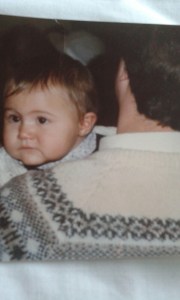
Sarah, as a baby

I remember standing by her bed, and several doctors asked us to step back as Sarah started to convulse. I have never felt so helpless in all my life, watching my baby so ill and not being able to do anything to help her. The doctors did not know what was wrong with her, but they told us it was likely she had a very serious virus. In my helplessness, I was crying out to the Lord, ‘Lord, Lord, help her… please help her.’ It was like our whole world had stopped. I remember also praying: ‘Lord, if you’re going to take her, please take her… but if you’re going to restore her to us, please let her be whole and healthy.’ I asked God to give me a sign that if she was going to be well, she would sit up. If I saw that, I would know that God would heal her.

Over the next few hours, the doctors were able to settle Sarah down, and a prayer chain was set up so that our church could pray. Over the next few days, Sarah was very sick and was put into isolation while the doctors tried to find out what was wrong. One day, I was sitting by Sarah’s bed when our friend from church, David, suddenly walked in. I said to him, ‘How did you get in here? They won’t let anyone but family in?’  David said he had just walked in and was there because he knew God had told him to come. He laid hands on Sarah, prayed, and then left the hospital.

I am not joking when I say that by lunchtime, Sarah had gone from being critically ill to sitting up. I had prayed for a sign, and there she was, just as I had prayed, sitting up! I wanted to take her home right there and then, but the doctors said she was still very sick. I knew in my heart though that God had heard my prayer. I knew he was going to heal her.

Sarah then had to endure a painful lumbar puncture. I had to hold her while they put a needle into her spine to test her spinal fluid.

We were then given unbelievable news – Sarah had Meningococcal meningitis.

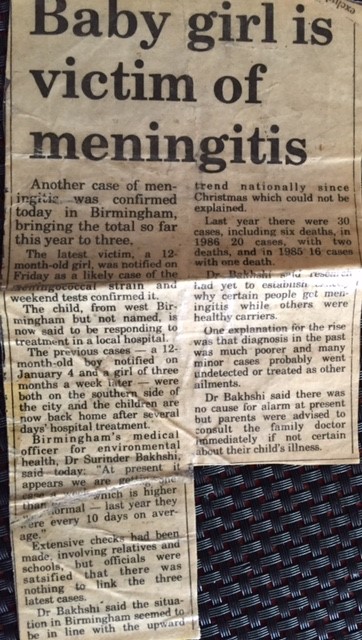
newspaper10 days had passed since she had been admitted, and it is almost unheard of for children to fight this strain of meningitis without antibiotics.

In fact, just a few weeks earlier, very sadly a 12-year-old boy who lived in the same local area had died from the same illness. The doctors immediately gave Sarah antibiotics, but they told us they couldn’t believe that she had survived. I said that we believed in God and we believed that He had healed her. The doctors told us they didn’t know what had happened, but it was clear something had. We were told that Sarah might have hearing problems or other development challenges, but I said, ‘no’. I had prayed that God would restore Sarah completely, and I knew He would be faithful to what He had promised.

Sarah was in hospital for a few more days, and after two weeks, she was allowed home. Even the local newspapers called her a ‘miracle baby’.

We just knew that God had saved her life.

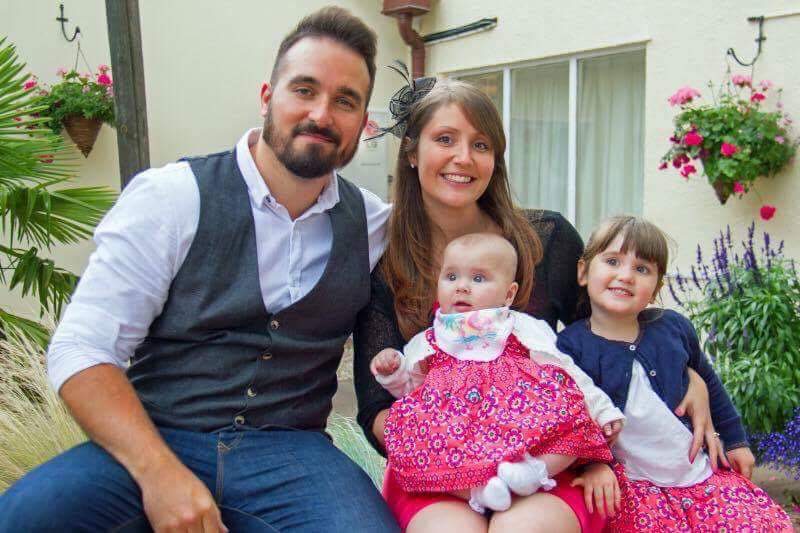
Today, Sarah is 29 years old. She is a teacher, plays violin and piano, and is a mum to two children. We can only give all the glory to God for what He did in Sarah’s life. Sarah is literally a miracle, and it amazes me to look back and remember all that God has done.

IMG_1654
Sarah and her family now.

(From David)

I wanted to share Sarah’s story as a powerful reminder that we serve a big, miracle-working God. You might be facing your own ‘Sarah situation’ right now, but can I encourage you to listen for God’s voice, to pray, and to trust God with the outcome. He says that He will never, ever leave us, and He is always faithful to His word.

To God be all the glory.

Christian Media, Christian Radio, Christianity, Devotional, Faith

How to hear God’s voice.

Some years ago, I was facing a personal storm in my life. I asked God to speak to me, but it felt as though I could not hear His voice. A short while later, we had a guest speaker at church, and I remember he spoke on Hebrews 13:5, where God assures His people: ‘I will never, ever leave you nor forsake you.’ At the time, although I heard the words, my mind wandered, and it was only later that I wished I had listened more closely.

Almost one year later, the same speaker came back to church, and he began his sermon with the exact same words from Hebrews 13:5. This time, I hung on to every word; I did not let my mind wander, and I knew that God had really, really spoken to me. He had given me a second chance to hear His word!

At times in our lives, we struggle to hear God’s voice, but I believe God is speaking all the time. I have a TV on the wall in my office. Some days it is switched on, and other days it is not. If the screen was blank, I would not ring the transmitter and ask why I could not see any pictures. I would first check the television to see if it was switched on or defective. Serving in a media organisation, I understand that we are surrounded by invisible TV and radio waves. We cannot see them or hear them unless we switch a receiver on. I believe our lives are the same – to hear God’s voice, we have to switch the receiver on or be tuned to the right frequency.

God’s voice can be heard in the silence

I was raised in the Pentecostal tradition, and our prayer meetings were always exciting, with a lot of fervent prayers. In that situation, sometimes it is easy to think that if we are silent, we are not praying. It is great to pray out loud, but at other times, we also have to tune out the background noise and understand that God does not need to shout in order to be heard. 1 Kings 19 says that God spoke to Elijah in a ‘gentle whisper’, and Psalm 23 says that He leads us beside ‘still waters’. God’s voice can often be heard most powerfully when we take time to be quiet, ready, and willing to listen.

God’s voice is distinct

There are many voices in our lives, and if we do not learn to recognise them, we can confuse the voice of God with other voices around us. There are many voices we can tune into. There’s the voice of our flesh, the voice of our conscience, the voice of our reasoning, the voice of God, and the voice of the enemy (to name a few). There are two important distinctions. The voice of the enemy has one agenda: to kill, to steal, to destroy. The voice of God, on the other hand, is there to lead us to our ultimate destination. His voice may not always tell us what we want to hear (sometimes He disciplines us), but His voice will always be focused – like the GPS in my car – on leading us to the place He wants us to go.

God speaks in more than one way

God speaks to us in many different ways. He can speak to us through His Word, through timing and circumstances, and sometimes, He can speak to us through other people. God’s voice is always accompanied by ‘the peace that passes all understanding’. When we are at peace, we will know that we have heard the voice of God.

I have known this peace in my own life on many occasions, even during the time when we lost our son Jamie. As I went to see Jamie in the Hospital’s Chapel of Rest, I did not want to hear or believe what God said in that moment, but yet, I knew it was the voice of God.

On another occasion (a few weeks before Jamie passed away) I felt strongly prompted to go and pray for a friend’s daughter who had been taken suddenly and seriously ill. I knew, that I knew, that I knew that I needed to go and pray for this little girl. I will share more about this story soon!

If you are listening for God’s voice today and struggling to hear what He is saying, can I encourage you to ‘tune in’ your receiver. Even if you are looking for direction and cannot clearly hear God’s voice (like I was), keep believing and trusting.

God is speaking all the time.  Are we listening?

David-Blog25 (004)

Christian Media, Christian Radio, Christianity, Devotional

When you’re in God’s waiting room

It was so good to have our friend Tommy Tenney with us at UCB last week. Tommy has spent over 40 years in itinerant ministry and is the author of The God Chasers. He spoke to a group of leaders for the filming of UCB’s Foundation event on Wednesday and shared on the subject of waiting. It is an experience we are all familiar with!

I sat down and asked Tommy about his experiences of waiting and what God has taught him.

How should we respond when we are waiting for God to fulfil a promise?  

The first thing to say is that God doesn’t mind adding the ingredient of time to the recipe of our lives. I have often watched my wife make a cake, and sometimes she will take the cake out of the oven and test it with a toothpick. The ingredients of the cake are right, the temperature of the oven is right, but all the cake needs is time.

It’s the same with soup or any other recipe. You can add all the right vegetables and all the right seasoning, but sometimes it needs to simmer; it needs time before it tastes just right. So, God really doesn’t mind adding the ingredient of time to our lives. Maybe he sometimes puts a divine toothpick in our lives and says ‘All this needs is time.’

Secondly, I think we need to change the picture in our minds of what waiting is all about. We think of ‘waiting’ as the experience of sitting in a doctor’s waiting room, waiting to be seen. I believe this is the wrong picture. We should instead look at waiting as being like a waiter or waitress serving in a restaurant. It is a very active process: they are serving, helping to make others comfortable. They may even be waiting for their own dreams to come true, but while they are waiting, they are serving. You can learn some of life’s biggest lessons when you serve someone else’s dreams. I have learned that when you serve and make someone else’s dreams come true, God makes your dreams come true. Waiting doesn’t have to be an experience where you sit there and twiddle your thumbs – it should be an active experience while you are waiting for God to move in your own life.

It can be very frustrating though?  

Waiting isn’t easy, but we can also learn a great deal in the process. If you look at the story of Abraham and Sarah, God promised Abraham that he would be the father of many nations, but time was against them. They thought: ‘if we don’t do this now, it won’t ever happen.’ And so they rushed ahead of God’s timing and brought Hagar in, and Ishmael was born. What Abraham and Sarah had not realised was that by rushing ahead of God, they were actually creating future conflict for themselves and generations to come. We still live with the effects of that conflict today.

Have you ever experienced being in ‘God’s waiting room’?

Yes, there have been many occasions. Next year is the 20th anniversary of the publication of The God Chasers. Before that, I had been in ministry for 20 years. If it had been up to me, I would have written the book many years before. But God said ‘No, now is not the right time, wait until you’re ready.’ So I continued to serve in ministry and being faithful as a preacher.

On another occasion, after I had written a novel about the life of Esther, I received a prophetic word that the book was to be turned into a movie. I shared the vision with those who could help me pray and process this word, and we very quickly got a cash investment, but we needed a great deal more. Then not one penny came in for the whole of the next year. We started to question whether we should just refund the original investment to the guys and tell them the movie was not going to happen. Then that Christmas, I was by myself one day and received a phone call from one of the people we were talking to. He said ‘Are you sitting down?’ Then he told us that he had just gotten $12 million dollars funding for the film. We had one full year with no sign of any funding, and then this!

I believe that waiting for God’s promises can be a time of worship. We don’t like waiting, but it is in God’s waiting room that we often learn life’s biggest lessons.

You can sign up for updates from UCB here.

David-Blog24

Christian Media, Christian Radio, Christianity, Devotional

The power of telling your story.

I believe that we each have a story to tell, and I think it is important that we are ready (at any time) to tell it, both in words and in the way we live our lives.

In Mark 5, the story is told of Jesus healing the daughter of Jairus. She had been very sick, and as the daughter of a religious leader, it is likely she would have been well-known in her community. But as Jesus arrived at her home, it was too late. She had already died.

All around and inside the house were mourners, people yelling and crying about the loss of this little girl. Jesus was confronted with the reality and finality of human death. He immediately told all the mourners to leave the house, and then he took the girl’s hand and restored her back to life. And then in a puzzling verse, Jesus told the family to ‘tell no one’. It was not just a suggestion, it was a command.

In other parts of Scripture, we are told about the power of testimony, so why would Jesus command the family to keep quiet? I read this story again recently, and I believe there is a simple answer. As Jairus was the leader of the synagogue, he and his family would have been well-known and respected in the community. When Jesus arrived at their home, the house was already full of mourners, so the locals already knew that she was dead. So when Jesus brought her back to life, there was no need to tell anyone. She was a living, breathing testimony. She was the story.

Saint Francis of Assisi once said: ‘Preach the Gospel, use words if necessary.’ Many have debated this saying, but personally, I believe it means that when we have been transformed by the power of God, our lives are a walking, living testimony. We can use words to tell our story (and it is important to do so), but the words need to be backed up with evidence of a life which is changed. We can all debate words and philosophies and theology, but no one can argue with a story and a life which has been transformed.

When Jesus healed a blind man in John 9:13-25, the Pharisees questioned the man to ask how this had happened. They wanted to debate theology with him, but he simply replied: ‘I was blind, but now I see.’ Who can argue with that?!

We all have a story to share. Some may have been healed and set free or restored. For others, it may be that they were aware of God’s presence in a difficult time, but I believe we should always be ready to demonstrate and tell our story.

Here are some practical ideas:

Tell the truth

This might seem obvious, but it is important to not tamper with or change the details of the story. It can be tempting to add (or take away) details, but in doing so, we can remove all the power. Tell your story and allow God to add power to your words.

Tell your story in chapters

Imagine your life story as a book – full of different chapters. You do not have to tell the full story, but you can share different chapters at appropriate times. Depending on who I am speaking to, I use different ‘chapters’ of my testimony. Sometimes I will share the story of how I, as a rebellious young man, came to England and met God powerfully. Or I might share about the time we had no money or petrol in the car, but we prayed and God provided in a miraculous way. Or, as I have shared here, I might tell the chapter when we lost our son Jamie. You do not have to tell the whole story. The individual chapters can be just as powerful.

Some stories don’t end well

In 1988, a few weeks before we lost our son Jamie, our friends’ daughter Sarah was taken very seriously ill with meningitis. I will tell her story in a future blog post, but God stepped in and healed Sarah in a miraculous way. A few weeks later, we lost our son, and it led to many questions about why God would heal one child and yet take another. Even though our family’s story did not end the way we wanted it to, it is still a story of God’s amazing provision and faithfulness. Even if your story did not conclude the way you wanted it to, you can still tell of how God sustained you in the difficult times.

The enemy will try to stop you.

I believe the enemy knows the power of testimony. The original Hebrew root of the word ‘testimony’ means to ‘do it again’.  In other words, when we share our testimony, we are literally encouraging others to believe that God CAN ‘do it again’. The enemy will try to quench the power of stories, and he will try to stop you from sharing yours, but when you tell your story, you are saying to the world ‘God is alive and He is at work in my life.’ There is huge power in that.

I believe that God wants to ‘do it again’. Do you have a story to share? Why don’t you start to tell it?

______________________________________________________________

At UCB, we love to hear your stories. If UCB has helped you in some way (either through something you have read, heard or watched), we would love to hear from you. You can fill in the form below and one of our team will contact you for more information.

Go back

Your message has been sent

Warning
Warning
Warning
Warning
Warning

Warning.

David-Blog23

Christian Media, Christian Radio, Christianity, Devotional, Faith

There is hope! God can use you.

We are living in unprecedented times. Our political systems are changing, and if we read the newspapers, some people feel a sense of hopelessness and are worried about their future. I believe there IS hope!

It is important to say at the start that God created each of us to a unique pattern. We are made in His image and are designed to model His character. I have a hand print; you have a hand print. And it is unique to each of us. The fact that we are all a ‘one off edition’ says to me that God made each of us for a purpose. We were made intentionally and with great attention to detail.

For this reason, when God looks at us, He doesn’t see the outward appearance or the environment. He looks at our hearts. The Bible is full of examples where God overlooked the obvious circumstances and instead saw the potential of each person.

God’s Word tells us this:

Noah used to get drunk

Abram was old

Jacob was a liar

Joseph was bullied

Moses was a murderer

Samson was a womaniser

Rahab was a sex worker

David was an adulterer

Elijah experienced depression and suicidal thoughts

Naomi was a widow

Jonah ran from God

Peter was a liar

And, just when they were needed most in the Garden of Gethsemane, the disciples all fell asleep.

All of these things, in human terms, could have disqualified the person from a fruitful life, and yet God gave them each a unique purpose and a job to do.

We all know the famous verse of John 3:16: ‘For God so loved the world, that He gave His only begotten son, that whosoever believes in Him will have eternal life.’

The key for me is the word whosoever. In other words, everyone and anyone who calls upon the Lord. God makes no distinction other than a distinction between those who belong to Him and those who do not. He came to give life, and life in all its fullness, to all who believe in Him.

When we truly belong to the Lord, He starts to renew our minds with His thoughts, and we can begin to see ourselves and the people around us as He sees us. God sees beyond our education, culture, or circumstances, and He sees all that we can be if we trust in Him.

If we are to be united as believers and as churches across the country, we have to allow God to transform and renew our minds. As our minds are transformed, we will begin to see all people as Jesus sees them: full of potential with a unique hand print, created for a purpose.

DLH BLOG - Jul 16

Christian Media, Christian Radio, Christianity

How to be a good leader

As the UK welcomes Theresa May into the top job at Number 10 (and she assembles her new team) I have been thinking this week about what makes a good leader.

We are all leaders of one kind or another. You do not have to run a country or a big organisation to be a leader. You might lead a group at church, you might be the leader in your home. Nearly all of us have the capacity to lead, and there are some good principles about leadership qualities in Psalm 15. However, I think the way Jesus lived His life gives us the best model of how to be a good leader.

Jesus wasn’t self-promoting

As leaders we can sometimes fall in to the trap of thinking we are better than others. Sadly some leaders have achieved their position by self-promotion and by dishonouring others on their way to the top. But Jesus never promoted Himself. He did not have to. His good works were so obvious that others talked about Him, and news about him spread quickly over the whole region of Galilee (Mark 1:28).  

Jesus was all about relationships

Jesus knew how to assemble a good team, but unlike selecting a new Cabinet, He did not always pick people with experience and the right skills. The disciples were a mixed group of individuals from very different backgrounds. Jesus was more concerned about relationships and about releasing people into their full potential. True leadership should be relational, not transactional. In other words, leadership is not about what I can get from other people but about the relationships and the people I can develop. I believe a strong leader builds a good team in order to eventually release them to go into all the world (Mark 16:15).

Jesus knew who He was

Jesus knew who He was. He wasn’t threatened by others or insecure.  We have to get our ultimate security from who we are in Christ, not in our job, in leadership, or our position in life.

Jesus wasn’t afraid of confrontation

Jesus wasn’t afraid to deal with issues as they came up. He confronted the Pharisees, and in one very famous scene, overthrew the merchants’ tables in the temple. As leaders, we should not be afraid to confront issues, but at the same time, we have to be discerning about the issues we do confront. It is easy to confront the wrong thing, so we need to know when to speak and when to remain silent.

Jesus knew when to stop talking.  

When facing the toughest test of His life, standing before Pilate, Jesus did not speak. He was being confronted with vile, untrue allegations and was being mocked, but He chose to remain silent. Sometimes we feel the need to defend ourselves, and it is true that sometimes we do need to speak up and stand for what is right, but we must also learn when to remain silent. Sometimes saying nothing at all is the best thing we can do.

Jesus was compassionate

Jesus met many sick and dying and distressed people, and His heart was always filled with compassion for them. I think compassion has to ‘possess’ us. We need to feel compassion for those around us: dream it, live it, and experience compassion in all areas of our lives. It is easy to become hardened to the things we see around us, but Jesus’ life was all about compassion, about seeing the needs of people and releasing them into freedom.

The UK is in a time of unprecedented change, and with a new Prime Minister and Government in charge, we need to keep the leaders of our country in prayer. My personal prayer for Theresa May is that God would bless her and that He would enlarge her capacity for peace, compassion, care, love and mercy.

I pray that as the government leads our country into an unknown future, that God would give our leaders wisdom so that together, we can stand united once again.

leader

Christian Media, Christian Radio, Christianity, Devotional, Evangelism, Faith, Healing, Hope, Miracles

Look to the future – what do you see?

Over the last few weeks, I have been spending some time with God, seeking the way forward for UCB as a ministry. I have been rejoicing about the past and those who have gone before us, but also rejoicing about the many lives which have been changed and transformed by the power of God’s Word.

I recently met with a group of UCB supporters and shared what I see for the future. I want to share the same message with you and give you a glimpse of what I am seeing today. It is a glimpse that came from the challenge Jesus gave to his disciples when He said to them: ‘Lift up your eyes, and look at the fields and see how white and ready they are for the harvest’ (John 4:35).

Instead of looking at the gloom and despondency and brokenness that is in our world today, God wants us to see what He sees.

Here is what I see.

I see God turning the hearts of a godless society back to Himself.

I see a church living and operating in the power of the Gospel.

I see our government, our laws, our society being reshaped by the truth of God’s Word.

I see family units coming together into the knowledge and the transformation of God’s power, from the toughest parts of the cities to the most rural parts of our country.

I see every generation, should it be young or old, knowing their worth and experiencing value and a purpose for their lives.

I see people standing for what it is true and becoming intolerant for all the right reasons – intolerant of wrongdoing, intolerant of injustice.

I see people getting ready to answer God’s call like they have never done before. I see people standing together totally united for their cities and not afraid to say ‘We are the Church’.

I see the Church mobilised to take the Gospel to the towns, villages and the cities, making disciples and being totally committed to what God has called them to do.

I see changing statistics: relationships being restored, addictions broken. I see miracles to be the order of the day in the life of our society because the Church is acting like true light and salt like never before.

I see an army of young people having visions, and I see older people, instead of being put ‘on the shelf,’ having dreams like they have never had before, supporting and standing with the younger generation.

I truly believe and see a day coming when God will pour His Spirit upon all flesh. I see the young and the old, the children and the grandparents lifting the banner of victory, looking at their society and truly believing that God has a message of hope, and using every means possible to lift up that message of truth.

You might say ‘Dave, you’re living in cuckoo land, you’re dreaming!’

But I am seeing only what Jesus spoke of to his disciples, and I am saying that it is time that we lift up your eyes from the negative, from the oppressive, from the depressive, and recognise that the fields are white for harvest.

And therefore it is time. I believe that we as a ministry, and you as partners and supporters, must actually start to switch on and see what God wants us to see.

And let’s believe that the enemy will not have the upper hand.  He may think that he has the best strategy – to steal, to kill, to destroy – but the verse does not stop there because Jesus says even to us today through His Word that He came that we might have life – and not just life, but life to the full (John 10:10).

I strongly believe we are moving into an unprecedented hour and that we as a ministry need to be ready like never before. We need to be ready for people to be resourced and helped in their faith. And we need to be ready to resource the church, for I believe they will not be able to cope with the amount of people who will be coming in.   They need to have reliable content.

There is a saying in media that ‘content is king’. This means that all our strategies are of no use if our content – if what we write or share on air – is not good. I believe today, though, that God is turning that around and saying: ‘The KING is the content.’

David-Blog21

#EUReferendum, Christian Media, Christian Radio, Christianity, Devotional, Faith, Hope

Trusting God in the middle of turbulence

This week’s blog is a guest post, written by a good friend, Alan Scotland, Chairman of UCB’s Board and Global Horizons. Among many other responsibilities, Alan is also a well-respected Pastor to Pastors. 

I remember being on a plane to the US some years ago when the pilot announced that we were about to enter a ‘corridor of turbulence’. I will never forget his words: ‘It is just a corridor of turbulence, it will pass. Don’t panic.’

The shaking of the plane lasted for about 25 minutes, although it felt much longer. At one point, I thought I should try to contact my wife to leave a message and say my goodbyes. But eventually, the turbulence passed, and the plane landed safely.

Turbulence in any area of our lives is deeply uncomfortable. We think it will never end; we may even think that we won’t make it. But for the believer, our confidence is not in systems or technology or even politics: our confidence must be in the Lord and in His faithfulness. It’s not trite to say this – it’s the truth.

However, when we are facing uncertainty in the world, how can we respond?

Be certain of your certainties.

The world is shaking at the moment. From North to South, nearly every area of the world is affected by turmoil of one kind or another. For believers, this is a pressure test, and we need to ask ourselves this: what is our faith placed in? Is it our finances? Our health? The Prime Minister? All of those things, as we are seeing, can be taken away, but God promises us that He will be faithful to every generation. This is a time for believers to be certain of what we believe in and to stand firm on those certainties.

Don’t join the symphony of soundbites

I am saddened by the turmoil around us, but I also feel grief at the many negative attitudes and soundbites which are getting coverage. As Christians, we need to bring stability with our words, and we have to be careful that we don’t join the symphony of negativity around us.

We need to declare truth and hope in the middle of despair and model what it is to be human (but humans who have divine guidance). We might not like what is happening, but there is no doubt in my mind that God is moving and challenging us as people and as the church. In a time of despair, believers need to be saying boldly ‘Yes the ship is at sea, but we have an anchor that is firm and secure.’

Learn to let go

My wife once took me on a big dipper. My response was to cling tightly to the bar and wait for it to be over. My wife said to me ‘Let go Alan, stop gripping so tightly.’ In times of difficulty, it is very easy to ‘cling to the bar’, to cling to what we see and know. Proverbs 3:5-6 says ‘Trust in the Lord with all your heart and don’t lean on your own understanding.’ One of our absolute certainties needs to be our unshakeable trust in God. He will not fail us or let us down.

Have a vision for the future

We need a vision for the future. We need to be able to see what God is doing, and what God is wanting to do next. Why don’t you take a moment and ask yourself this: ‘What do I see?’ What is your dream for the future of this nation?

When I look to the future, I see a massive, unprecedented move of God. Not a move of God which is restricted to a continent or a nation, but a universal move of the Spirit, a move of God that is so big that no one will be able to put their name on it. It will be God at work, increasing His Kingdom in a way that we could not even imagine.

My theology in days like these is shaped by hope. Even in the middle of turbulence, I see God shaping and preparing us for a universal, multi-national move of His presence. With that knowledge, we have nothing to fear. We have hope, and those who trust and put their hope in the Lord will never be put to shame.

Trusting God In The Middle Of Turbulence

Christian Media, Christian Radio, Christianity, Evangelism, Faith

How should you vote on Thursday?

We have received some letters and questions from UCB supporters recently, asking for advice on how vote in Thursday’s EU Referendum.

As I am a French citizen, I am not able to vote, so I do not have to personally make a decision. However, I wanted to briefly explain some thoughts on our responsibilities as believers.

We are surrounded by many voices and opinions, and it can be very confusing. There are strong opinions on both sides of the EU Referendum from Christians, and it is true that we really need God’s wisdom. Some may even be thinking that it is ‘just one vote’ and it won’t count, but I believe every vote counts, and it is important that Christians use their voice in political decisions.

But how should you vote? Well, simply, some choices cannot be delegated. We can seek counsel from friends, but I believe it is our individual responsibility to research the facts with an open mind, to pray, and to allow the Spirit of God to guide our decision-making.

As Christians, we should look to have a Kingdom perspective. We should look to the outcome and ask which outcome will give us the most opportunity to reach people with the Gospel.

I don’t think one person can tell another person how to vote, but if we keep a Kingdom perspective in mind and ask God to give us His wisdom, He will guide us to a good choice. God’s Word reminds us in James 1:5: ‘If any of you lacks wisdom, you should ask God, who gives generously to all without finding fault, and it will be given to you.’

Decisions are sometimes quick and easy and other times very hard. As you head to the polling stations on Thursday, my prayer is that you will be well-informed and ready to vote with prayerful discernment.

Whatever the result, the UK will be different, and let’s believe for a great outcome that will facilitate the extension of God’s Kingdom in many lives.

Let’s continue to pray for our nation and for God’s Will to be done.

David-Blog17